
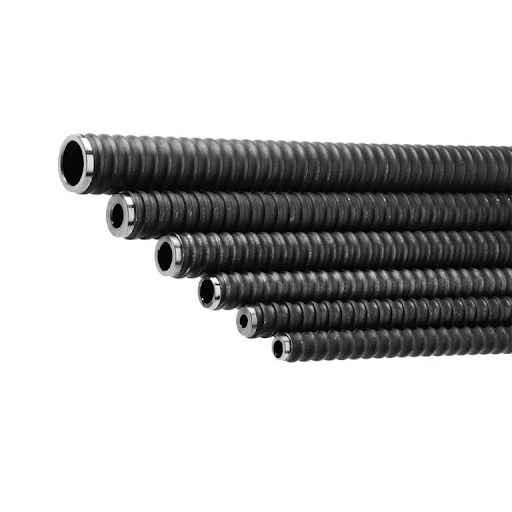
Ground support engineering relies on a range of specialized hardware, and hollow bar systems represent one of the more practical solutions for anchoring in ground conditions that traditional methods struggle to handle reliably. Understanding what these hollow bars actually are, and why the hollow design matters so much, helps clarify why this technology has become common in mining, tunneling, and slope stabilization work.
What Makes a Hollow Bar Different From a Solid Anchor
As the name suggests, an SDA hollow bar has a hollow core running through its length, rather than being a solid piece of steel like more traditional anchoring rods. This hollow design serves a specific and genuinely important purpose. It allows the bar itself to function as a drill during installation, while also providing a channel through which grout can be injected once drilling is complete, securing the bar in place without needing a separate step to introduce the anchoring material.
Why the Combined Drilling and Grouting Function Matters
In stable ground conditions, a traditional approach of drilling a hole first and then inserting a separate anchor works perfectly well. But in loose, fractured, or otherwise unstable ground, a pre drilled hole can collapse or become unstable before a separate anchor can actually be inserted into it. Hollow bar systems solve this problem directly by eliminating the gap between drilling and anchoring entirely, since grouting happens through the same hollow core immediately after drilling reaches the required depth.
Thread Design and Load Bearing Performance
The specific thread design used on a hollow bar significantly affects its load bearing capacity and how well it bonds with surrounding grout and ground material. Different thread profiles are suited to different applications and ground conditions, and choosing the right specification depends on a proper understanding of the load requirements and ground characteristics of a specific project, rather than assuming a single standard specification will perform adequately across every application.
Common Applications for This Technology
Hollow bar systems are frequently used in situations involving fractured rock, loose soil, or ground with significant water infiltration, where maintaining a stable pre drilled hole is genuinely difficult using traditional methods. This makes them particularly relevant in mining operations working through disturbed or naturally fractured rock, tunneling projects encountering unpredictable ground conditions, and slope stabilization work on surfaces with loose or weathered material.
Material Quality and Corrosion Resistance
Since these bars are often installed in ground conditions involving moisture, and sometimes in environments with corrosive soil chemistry, material quality and corrosion protection matter significantly for long term performance. Working with a supplier who can speak clearly about the specific material grade and any corrosion protection measures applied to their sda hollow bars helps ensure the product genuinely holds up to the environmental conditions of a specific installation site, rather than degrading faster than expected in a challenging environment.
When Traditional Anchoring Might Still Make Sense
Hollow bar systems are not automatically the better choice for every ground support application. In stable, predictable ground conditions where a pre drilled hole is unlikely to present any real risk of collapse, traditional anchoring methods can still be a reasonable and sometimes more cost effective choice. The right decision really comes down to actual ground conditions and project specific requirements, which is why proper geotechnical assessment before choosing an anchoring method remains an essential first step regardless of how well established either approach might be.
Making an Informed Choice Based on Real Site Conditions
Understanding both the genuine advantages and the appropriate use cases for hollow bar systems helps project teams choose the right anchoring approach based on actual site conditions, rather than defaulting to whichever method happens to be more familiar or commonly discussed within a given region or industry segment.
Taking the time to make that assessment properly, rather than assuming one anchoring method suits every situation equally well, remains the single most important step in ensuring a ground support installation actually performs the way it needs to over its full structural lifespan.