
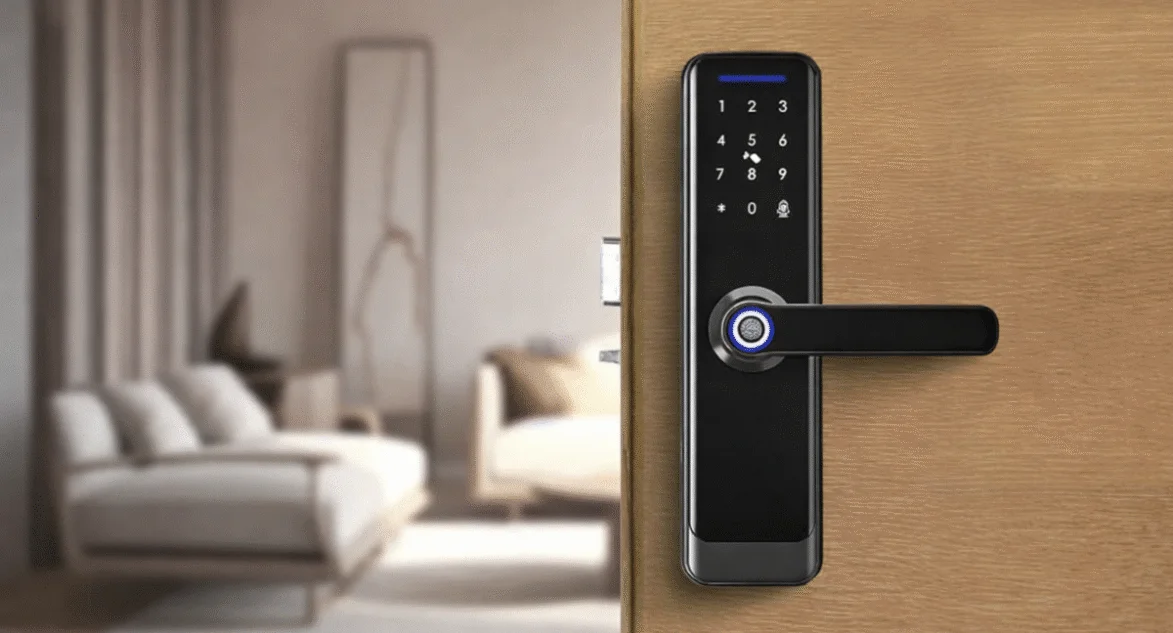
My neighbour bought a smart lock last Diwali. I think it was on some flash sale, one of those weekends where every appliance is suddenly 40 percent off. He showed it to me proudly on the lift. By March the keypad started doing strange things after a humid week, and by May the app was logging him out every few days. He told me last week he keeps a spare key under a plant near the door now, just in case. The whole thing is a bit sad if you think about it.
That story is more common than the brochures suggest. Smart locks have become the default upgrade for Indian homes in 2026, sitting somewhere between a smart TV and a decent water purifier on the priority list. The problem is that two locks costing roughly the same money can give you completely different experiences, and you cannot tell which is which from a marketplace listing. The photos look the same. The feature lists look the same. They are not the same.
1. Indian Conditions, Not Global Specs
A lock built for a temperature-controlled Berlin flat does not always behave well in a Chennai July. Our doors are heavier. The walls in older buildings hold monsoon damp for what feels like half the year. Power cuts still happen in most cities, sometimes for a few hours at a stretch, and during construction season the dust settles into electronics in ways the brochure never warns you about.
So when you read a spec sheet, keep all of that in mind. If the brand cannot tell you the humidity tolerance, assume the worst.
2. The Unlocking Methods You Will Actually Use
Most modern units brag about five ways to get in. Fingerprint, PIN, RFID card, app, mechanical key. Looks great on the box. In real life? Your family will settle into one or two within a fortnight and forget the rest exists.
The fingerprint reader takes the daily beating, so its accuracy when your hand is slightly wet, slightly oily, slightly cold, is what matters. Not how many fingerprints it can store. The keypad should glow enough at night that your mother-in-law does not need her glasses. Small things. They decide whether you love the lock or quietly hate it.
Have a look at the best smart locks made with Indian use in mind, then pick by the methods your household will realistically rely on. Ignore the feature checklist. Trust the daily-use logic.
3. Battery Life That Respects Power Cuts
Cheap locks die first on this one. Things to check, honestly:
- Twelve months minimum on regular AA cells, ideally fifteen
- Low-battery alerts starting at around 20 percent, not when you are already locked out
- A Type-C or micro-USB port on the outside face for emergency power from a phone charger
- A real mechanical key override, the kind that does not bend if you sneeze on it
A lock that gives up at 11:45 pm during a Diwali power cut is not a smart lock. It is a paperweight bolted to your door.
4. Build Quality, IP Rating, Tamper Alerts
The body matters more than the brand. Zinc alloy chassis, deep bolt, weatherproof sensor cover. If your main door faces an open balcony or a corridor that gets rain spray, look for IP54 at minimum. Anything below that is not built for our climate, no matter what the listing says.
And get a lock that pings your phone when somebody tries five wrong PINs in a row. This is a basic feature in 2026. If the model you are eyeing does not have it, that tells you something about the company.
5. The App. The Quiet Dealbreaker.
This is where most brands lose loyal customers within six months. A smart lock is only as good as the app behind it, and a surprising number of expensive locks have apps that feel like they were built in a hurry.
You want fast Bluetooth pairing for daily use. Wi-Fi for when you are travelling and the courier needs in. Clean activity logs that actually show who came home when. Voice routines through Alexa or Google Home that work without needing a separate hub eight times out of ten.
| Connectivity | Daily Use | Remote Access | Typical Price Band |
| Bluetooth only | Quick, no cloud | Not possible | Lowest |
| Wi-Fi built in | Quick | Works from anywhere | Mid |
| Wi-Fi through a hub | Stable on Zigbee | Hub-dependent | Highest |
Pick based on whether you actually travel. If you barely leave the city, paying extra for remote access you will use twice a year makes no sense.
6. Encryption and Certifications Nobody Reads About
This section is the one most reviews skip. So I will keep it brief and useful.
Look for AES-128 encryption on the wireless protocol. Without it, the lock can be cloned by a determined teenager with a YouTube tutorial. Check for BIS certification, because that is the local benchmark that actually means something here. And see if the brand has pushed firmware updates in the last year. A lock that has never been updated is not perfect. It has been abandoned.
7. Service Reach, Warranty, Installation
Plenty of imported locks ship with warranties that only work if you can post the unit back to Shenzhen. Skip those. You want a brand with in-home installation by trained technicians, a minimum two-year warranty on electronics, and service available in your city. Not just the metros.
The cheapest lock on a flash sale is almost never the cheapest over five years. Anyone who has replaced a lock twice will tell you this for free.
Conclusion
Buying smart locks in 2026 is not about picking the one with the most features. It is about picking the one that will still be working in 2029, on a humid Saturday afternoon, after the power has been out since lunch. That comes down to battery design, sensor quality, encryption, and whether the company will pick up when you call.
Read reviews that are at least a month old. Launch-week reviews are mostly noise. Talk to the technician installing it. Ask which model he has had to come back and fix the most often, then do the opposite of that.
A good smart lock disappears into your routine. You stop thinking about it. You come home, your door opens, your day continues. That is the whole job.