
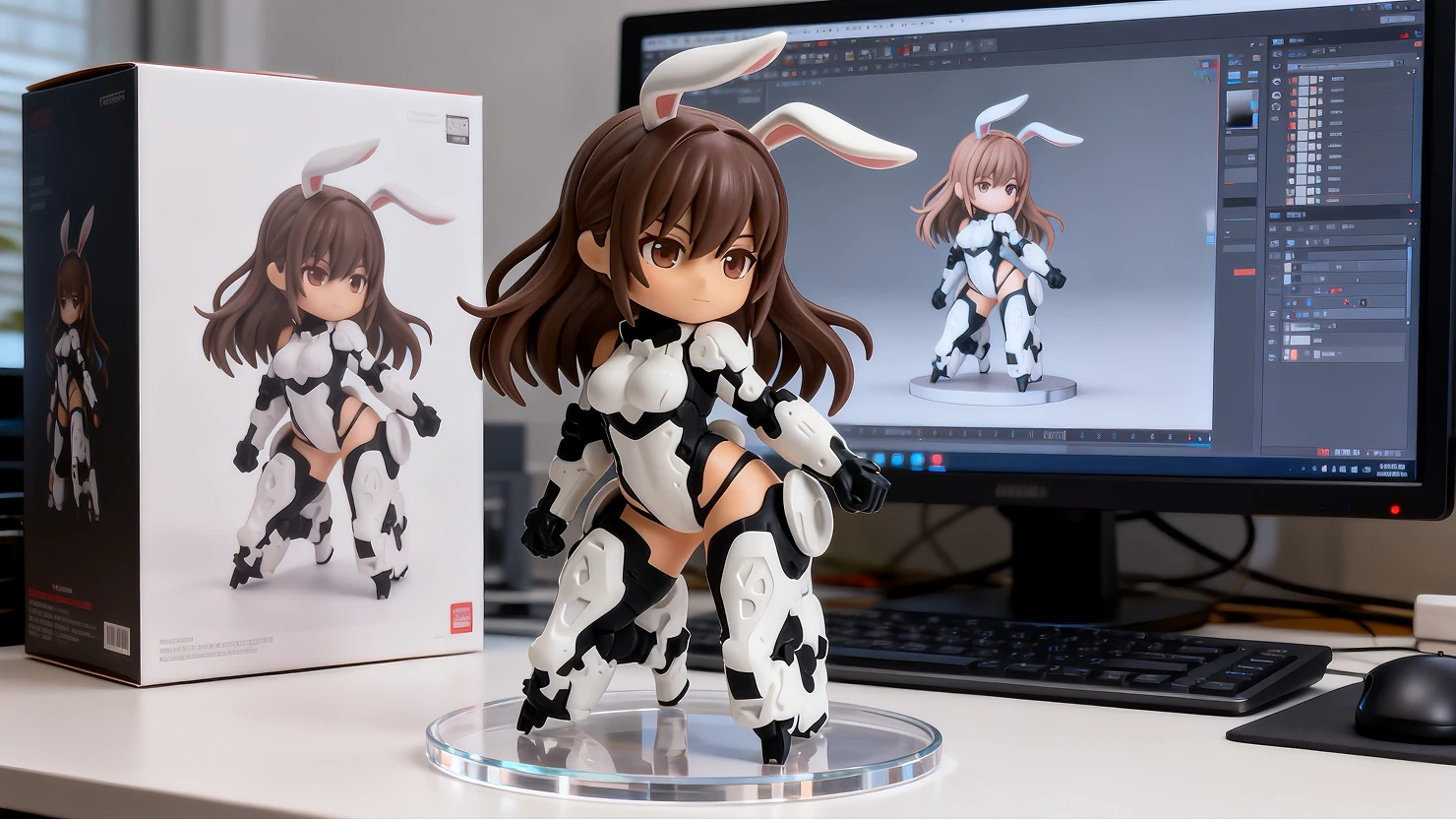
3D printing has gradually become a practical tool that connects digital creativity with the physical world. From personalized collectibles and creative prototypes to educational models and product concepts, 3D printing allows more people to transform ideas into tangible objects.
As artificial intelligence continues to develop, AI-powered 3D printing is becoming an important part of this evolution. Instead of relying entirely on complicated modeling workflows, creators can now use AI to accelerate design, improve details, and explore new possibilities. However, generating a 3D model is only the beginning. Turning an AI-created model into a realistic, colorful, and printable object remains a challenge for many users.
Hi3D focuses on solving these challenges by connecting AI creation with practical 3D printing workflows. Through features such as AI texture generation, multi-color printing preparation, model splitting, and intelligent print optimization, Hi3D helps creators move beyond digital models and create objects that are ready for real-world production.
1. The Challenges Behind AI 3D Printing: Creating Models Is Only the First Step
Although AI has made 3D creation faster and more accessible, users still face several challenges after generating a model. A visually impressive model on screen does not always mean it can become a high-quality printed object.Different users encounter different problems during the process, from improving visual details to preparing models for actual printing.
1.1 AI-Generated Models Often Lack the Realistic Details Needed for Physical Objects
For beginners and creative users, generating a basic 3D shape is no longer the biggest challenge. The more important question is how to make the model look complete and professional.
A simple AI-generated model may have the correct structure, but without detailed surface information, it can appear flat or unfinished. Characters, products, and decorative models often require realistic materials, patterns, and visual details to achieve a more convincing result.For designers and makers, manually creating textures can require additional skills and a significant amount of time. This creates a gap between AI-generated concepts and production-quality models.
2. Hi3D AI Texturing Helps Transform Basic Models into Detailed Creations
One of Hi3D’s important advantages is its ability to improve the appearance of AI-generated 3D models through intelligent texture generation. Traditional texturing workflows often require users to understand professional 3D software, UV mapping, and material adjustments. For many creators, especially beginners, this process can become a barrier.
2.1 Creating More Detailed Surfaces Without Complex Manual Editing
Hi3D provides AI-assisted texture generation tools that simplify this stage. With an AI 3D texture generator, creators can enhance model surfaces with richer details and improve the overall visual quality of their designs.
This capability is particularly useful for models that depend heavily on appearance, including character figures, collectibles, and creative prototypes. Instead of manually adding every surface detail, users can use AI assistance to create more expressive results.
2.2 Making AI-Generated Models More Suitable for Real-World Printing
A high-quality 3D model is not only about geometry. Surface appearance plays an important role in how the final printed object looks and feels.Through an AI 3D model texture generator, Hi3D helps users create more complete textured models that are closer to their original creative intention. Whether the goal is creating a personalized figure or developing a product concept, improved textures help bridge the difference between digital visualization and physical output.
For creators who start from images or visual concepts, combining generation and texturing creates a smoother workflow. Instead of treating modeling and appearance as separate steps, Hi3D allows users to develop both aspects together.
2.3 Reducing the Technical Barrier with AI-Assisted Texture Creation
Many users are interested in 3D printing but do not have experience with professional design software. They may have creative ideas but lack the technical knowledge needed to create detailed models.
Hi3D’s AI texturing workflow helps reduce this barrier by allowing users to focus more on creative decisions rather than complicated manual processes.This makes AI-powered 3D creation more approachable for hobbyists, designers, and small creators who want to produce high-quality models without spending excessive time on technical preparation.
3. From Digital Colors to Real Prints: Solving the Challenge of Multi-Color Printing
While textures improve the visual quality of a model, another important challenge appears when users want to physically print those colors.Many AI-generated models contain rich color information digitally, but transferring those colors into real filament-based printing is not always simple. Traditional approaches may create fragmented color regions, require manual adjustments, or increase printing complexity.
3.1 Hi3D Multi-Color Printing Connects AI Designs with Real Filament Materials
Hi3D’s multi-color printing feature is designed to help transform textured 3D models into printable multi-color objects.
Instead of simply converting digital colors into separated areas, Hi3D focuses on creating more practical color regions, matching colors with available filament options, and reducing unnecessary color changes during printing.This helps solve several common problems faced by makers:A model may contain too many small color areas that increase printing difficulty. Some colors may not match available materials. Manual repainting in slicer software can also require additional time.
Hi3D improves this workflow by providing color mapping, adjustable color count, detail control, and material-aware preparation. Users can better understand how their digital design will translate into actual printed results.
3.2 Making Colorful 3D Printing More Efficient for Creators
For creators producing figures, collectibles, and prototypes, appearance is often a key part of the final result.With Hi3D’s multi-color workflow, users can create more visually complete models while reducing unnecessary preparation work. The feature also supports exporting ready-to-print 3MF files, helping users continue the workflow with compatible slicer tools.This creates a more direct connection between AI-generated creativity and physical manufacturing.
4. Preparing Complex Models for Printing Through Intelligent Split Functions
Even when a model has excellent details and colors, printing limitations can still create difficulties. Large models may exceed printer build volume, while complex structures may require careful separation before production.This is another area where Hi3D focuses on improving the complete workflow.
4.1 Splitting Large Models into Practical Printable Parts
Many creators want to produce larger figures, characters, or detailed models, but printing them as a single piece is often difficult.
Hi3D’s Split-for-Printing feature helps divide complete models into printable sections. For character-based models, the system can separate areas such as the head, torso, arms, legs, weapons, and base.Instead of manually cutting models in professional software, users can achieve cleaner part separation and prepare models more efficiently.
4.2 Automatic Connector Generation Makes Assembly Easier
Splitting a model is only useful if the printed parts can be assembled properly.Hi3D supports automatic connector generation, creating structures that help different parts fit together after printing. Depending on the project requirements, users can use fixed connectors for display models or ball joints for articulated figures.
The system also allows adjustments to connector size, direction, and placement, giving creators more flexibility when preparing their models.This makes the workflow from digital model to physical object more complete:Generate a model, split it into parts, prepare connectors, print individual components, and assemble the final result.
5. Expanding the Complete AI 3D Printing Workflow with Hi3D
Beyond individual features, Hi3D’s biggest advantage is creating a more connected workflow between creativity and manufacturing.For users who want to explore AI-powered creation, Hi3D works as a complete 3D model maker online solution that combines model generation, texture improvement, and print preparation.For image-based creators, Hi3D also supports workflows related to image to 3D, helping users explore new ways to transform visual inspiration into three-dimensional designs.
The platform is designed to reduce unnecessary technical steps and help more users experience the complete journey from idea to printed object.
6. Why Hi3D Stands Out in the AI 3D Printing Landscape
The value of Hi3D is not only its ability to generate models but also its focus on what happens after generation.Many AI tools can create impressive digital assets, but successful 3D printing requires more: realistic textures, printable colors, suitable structures, and efficient preparation.
By combining AI texturing, multi-color printing support, Split-for-Printing, and smart print preparation features, Hi3D helps creators overcome the gap between digital creativity and physical production.Whether users are creating personal projects, developing prototypes, or exploring new forms of digital craftsmanship, Hi3D provides a more practical approach to AI-powered 3D printing.
7. Celebrate Hi3D’s First Anniversary with Exclusive Savings
To celebrate its first anniversary, Hi3D is launching a limited-time anniversary promotion with special offers for creators.During the celebration, users can enjoy up to 70% off and explore a more efficient way to create, customize, and print AI-powered 3D models.From adding realistic textures to creating multi-color printed objects and preparing complex models for assembly, Hi3D helps turn creative ideas into physical reality.
Start your AI 3D creation journey with Hi3D today and discover a smarter way to bring digital designs into the real world.