
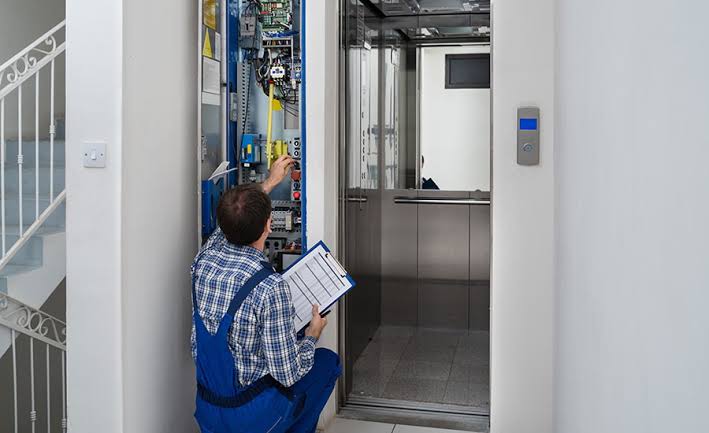
Installing or replacing elevators in a hospital is a project that touches patient care, building design and daily operations all at once. A mistake can mean slow transfers, blocked corridors or long periods without service. This checklist walks through the main steps and shows what to ask any hospital elevator manufacturer, using the information published by GOTS Elevator as a reference.
Step one: map how the hospital really moves
Before you look at products, watch how people and equipment move through the building. Which routes carry patients on beds? Where do staff carry equipment or supplies? When are the busiest times? A tall ward block may need several elevators with different roles, for example bed elevators for patients and separate ones for visitors or goods.
Write down the heaviest loads and the number of people usually traveling together. This guides the choice of capacity. GOTS Elevator lists hospital bed elevators with loads of 1600, 2000 or 2500 kg and medical elevator models of 1050, 1600 or 2000 kg, so there is a range to match different uses.
Step two: decide on capacity and speed
Capacity decides how many people or how much equipment can ride at once. Speed decides how quickly the elevator travels. The company lists speeds from 1.0 to 1.75 meters per second for its bed and medical models, and 1.0 to 3.0 meters per second for its general hospital and medical elevator category. Faster is not always better for a hospital with only a few floors, so discuss this with your engineer.
Step three: check door width and cabin depth
Doors and cabin depth often decide whether a bed can be turned and moved easily. The page lists extra wide doors of 1200 to 1500 mm for the hospital bed elevator and a deep cabin on the RD series for easy stretcher handling. The company does not publish cabin or shaft dimensions, so request drawings and compare them with the beds and stretchers used in your hospital.
Step four: examine safety features
Look at what protects patients and staff. The RD series is listed with 194 beam infrared light curtains, anti collision buffers and an intercom. The bed elevator is described as having emergency priority functions. Ask the supplier to explain what happens in a fault, how passengers can call for help, and how the elevator behaves if there is a power cut.
The company mentions backup power and 24 hour operational readiness for its hospital elevators. Ask how backup power is arranged and tested in practice.
Step five: consider electromagnetic issues
Hospitals contain many sensitive devices. The company describes the RD-Y2401 model as having EMC protection, dual 32 bit CPU control and ultra low electromagnetic emissions. If your hospital has imaging rooms, laboratories or intensive care units, talk with your technical team about whether such a feature is needed near those areas.
Step six: think about hygiene and finishes
Surfaces that are easy to clean are a must. The company lists antimicrobial interiors for its hospital elevators and offers customizable cabins and control panels to match hospital interiors. Ask what materials are used, how they should be cleaned and whether any cleaning agents are not recommended.
Also think about the look and feel. The RD-Y01 model is described as having a calm and clean appearance intended to reassure patients. A welcoming cabin can ease the stress of a hospital visit.
Step seven: check certificates and references
Ask the manufacturer to provide certificates for its elevators. GOTS Elevator lists EN81-20, EN81-50, EN115 and EAC certificates on its website, and states that it has seven production facilities, a 100 meter test tower and more than 70 patents. These are the company’s own statements, so ask for documents and references from similar projects.
Step eight: plan installation around a working hospital
Hospitals cannot simply stop. Ask how installation will be phased, how noise and dust will be controlled, and which elevators will remain in service during the work. A good plan avoids leaving a ward without a bed elevator for any length of time.
Step nine: agree on service in advance
Fast repairs matter even more in a hospital. The company says it provides installation and after sales service, with local service teams in most countries, and spare parts with short delivery times. Ask about response times, remote support, spare parts stock and training for your maintenance staff. Put all service commitments in writing.
Step ten: compare offers fairly
When you receive quotations, compare them on the same basis. Check capacities, speeds, door widths, safety systems, certificates, delivery schedule and service terms. A lower price that leaves out important features can cost much more later.
Final thought
A hospital elevator project succeeds when planning is careful, requirements are written clearly and the supplier is open about what it can deliver. Take the time to involve clinical staff, engineers and managers from the beginning, and the result will support patients and staff for many years.