
Many buyers of graphite parts deal with traders or agents without ever knowing where the parts are made. That can work, but it also adds distance between you and the people who actually machine your order. Some buyers prefer to go straight to a graphite factory, because it shortens the path from drawing to finished part. This article looks at what buying direct can offer, what to ask before you commit, and what to check, using the company information published by Haoxing Graphite.
Why some buyers go direct
When you deal with the maker, your questions reach the people who understand the material and the machines. If a drawing is unclear or a tolerance is too tight, the answer can come from the engineers instead of passing through several hands. Haoxing describes its operation as a combination of professional research and development with high capacity production, and says this integration helps it keep a stable and efficient supply chain, delivering components from its factory to the customer’s facility.
Direct contact can also make changes easier. If you need a different grade or a small design adjustment, you can discuss it with the people who will cut the part.
Look at the size and equipment
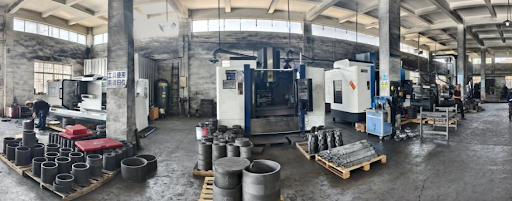
A factory should be able to show you what it works with. Haoxing states that its production facility covers 20,000 square meters and is equipped with a wide range of CNC lathes, milling machines and drilling equipment. CNC machines follow programmed instructions, which helps repeat the same shape accurately from one batch to the next.
The company also says its CNC machines allow it to produce parts with a high degree of accuracy. When you read a claim like this, ask for the exact tolerance in writing and ask which parts it applies to, because achievable tolerance depends on the size and shape of the part and the grade of graphite. A supplier that discusses this openly is easier to trust than one that promises everything.
Ask how quality is checked
Machines make parts, but measurement proves them. Haoxing lists coordinate measuring machines, airtightness testers and hardness testers in its quality control process. A coordinate measuring machine checks dimensions precisely. An airtightness tester shows whether a part leaks, which matters for certain furnace and vacuum uses. A hardness tester helps confirm that the material is consistent.
Before ordering, ask which checks apply to your product, and whether you can receive an inspection report with the shipment. For critical parts, written results are far more useful than a verbal assurance.
Check certificates and recognition
The company says it passed ISO9001 quality management system certification in 2021, and that it was recognized as a National High tech Enterprise in 2023, with multiple utility model patents authorized. These items are shown as certificates on its website. A certificate does not make every part perfect, but it shows that processes are documented. Ask any factory to show copies, and check the names and dates yourself.
Customization is where a factory helps most
Standard shapes do not suit every furnace or machine. Haoxing says it offers OEM and ODM solutions, with engineers working with customers from the first design stage through manufacturing, and that it helps customers choose the right graphite type according to density, particle size and hardness. This matters because a part made from the wrong grade can wear or crack early. When a factory asks about your temperature, atmosphere and load, it is trying to protect your result.
Its product range includes graphite plates, rods, blocks, molds, rotors, crucibles, bearings, rings and tubes, so one conversation can often cover several parts.
Packaging and delivery
Graphite is brittle, so the way it is packed matters as much as the way it is cut. The company says products are packed in strong plywood boxes without fumigation, with foam or similar shock absorbing material inside to protect against jolts and vibration during sea or air transport. It also says it works with logistics partners to deliver to more than 50 countries.
When you place an order, confirm the packing method for your specific parts, ask for the expected lead time and agree on shipping terms and documents in writing.
See the factory for yourself
Seeing a factory removes many doubts. Haoxing invites customers to schedule a factory tour on its About page and also provides a video of its facility. If you cannot travel, ask for a live video call that shows the machines, the inspection area and the packing area. Notice whether measuring tools are in regular use and whether finished parts are stored with care.
Be realistic about direct buying
Going direct is not automatically the best choice for everyone. A factory may have minimum order sizes or longer lead times for custom parts, and you may need to handle shipping and import paperwork yourself. A trader may offer smaller quantities or local stock. Think about your volume, your timeline and how much support you need, then decide which route suits you.
A short checklist
Ask for your drawing to be reviewed before a quote. Request a sample or a small first order. Confirm the grade of graphite in writing. Ask what will be inspected and what report you will receive. Agree on packaging and delivery terms. Keep all decisions in writing.
Dealing directly with a factory can bring clearer communication, better customization and more control over quality, but only if the factory is open about how it works. Ask questions, check the evidence and choose a partner who is happy to answer them.