
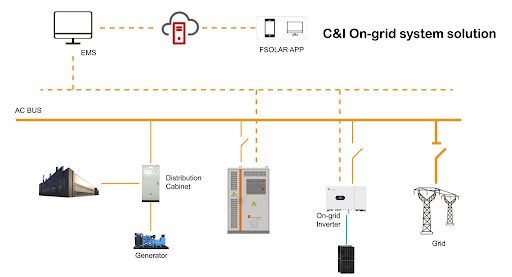
Electricity is one of the biggest running costs for many factories, warehouses and commercial buildings. It is also one of the least predictable. Prices can be higher at certain hours, grid supply can fluctuate, and a short outage can stop production. A well designed C&I energy storage solution gives businesses a way to take more control. This article explains what such a system does and what to look for, using information published by Felicitysolar on its commercial and industrial page.
What does C&I mean?
C&I stands for commercial and industrial. A C&I energy storage system is a battery based system sized for businesses instead of homes. It stores electricity from the grid or from renewable sources such as solar panels, and releases it when it is useful, for example during peak hours or an outage.
Felicitysolar says its C&I systems are designed to help businesses improve energy efficiency, reduce operating costs and support sustainable development, by helping them manage how energy is stored and used during peak loads.
Key features described by the company
According to the company’s page, its systems use a highly integrated, all in one design that combines energy storage, power conversion and control in one unit, which it says simplifies installation and saves space. It lists battery efficiency of up to 94 percent and system efficiency of up to 87 percent.
On safety, the page says the design avoids parallel connections and circulation between battery units, and it mentions triple fire protection covering thermal, electrical and mechanical aspects. For maintenance, the systems are said to include intelligent self diagnosis and fault location, which helps teams find a problem quickly.
The company also states that the system comes pre configured for grid connected or off grid use, that the battery cycle life is 6000 cycles or more, that capacity can be expanded through a modular design, and that it supports access for loads, batteries and photovoltaic input. These are the manufacturer’s own statements, so it is always wise to confirm exact specifications in the datasheet before buying.
Liquid cooling or air cooling?
Heat control is a big topic in battery systems. The company’s page presents two options, a 100kW and 232kWh liquid cooling system and an air cooling system.
Liquid cooling uses circulating coolant to take heat away from battery components. The company says it suits large installations with heavy energy flow, and that it takes up less space and runs more quietly than air cooling. Air cooling uses fans and airflow. The company describes it as a lower cost, simpler option with easier maintenance, suited to smaller systems, moderate demand or cooler climates. The right choice depends on your site, budget and workload, so it is worth discussing with the supplier.
Benefits the company highlights
The page lists several benefits. It says that through peak shaving and load shifting, systems can reduce electricity bills by 20 to 30 percent for commercial facilities, and that using stored solar or wind energy can lower carbon dioxide emissions by 15 to 25 percent a year. It also states that typical system uptime exceeds 99.9 percent, and that capacity can scale from 50 kWh to several MWh. It gives an expected lifespan of 10 to 15 years.
These numbers come from the company, and results will differ from one business to another, because they depend on tariffs, load patterns and system design. A careful buyer will ask for a proper assessment based on their own electricity data instead of relying on general figures.
Peak shaving simply means reducing the highest amount of power you draw from the grid, which can lower demand related charges where they apply. Load shifting means moving energy use from expensive hours to cheaper ones by charging the battery at one time and using it at another.
Real configurations
Felicitysolar’s solutions page shows how these ideas turn into specific packages. It lists a 125 kW package that pairs the IVGM125KHP3G1 inverter with the FLH48314UG1 battery for factories, and a 50 kW package that pairs the IVGM50KHP3G2 inverter with the FLH48100UG2 high voltage LFP battery for business use. It also lists a 125 kW and 261 kWh liquid cooled system under the FelicityMatrix name.
After sales and training
A storage system is only useful if it keeps running well. The company states that it offers round the clock technical assistance, real time monitoring, preventive maintenance, warranty coverage and training for operating staff. When comparing suppliers, ask what support is included and how quickly help can reach your site.
How to start
Begin with your own data. Collect twelve months of electricity bills and, if possible, hourly load information. Identify your peak hours and any critical loads that cannot stop. Decide whether you want solar integration now or later. Then ask suppliers for a proposal that shows system size, expected savings, safety features and support terms.
Energy storage will not suit every business, but for those with high peak charges, unreliable supply or solar panels already installed, it can be a very practical investment. Careful planning and honest numbers are the best way to find out.