
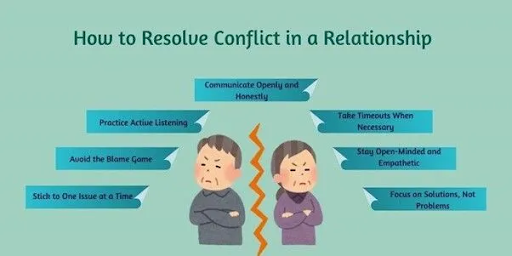
It is common for there to be some sort of conflict within a healthy relationship, but constant conflicts will lead people to feel like their voices are not being heard, frustrated, and even disconnected. When discussions tend to go around in circles, then the presence of someone who is neutral will allow them to identify the real source of the issue. Relationship mediation offers an environment where individuals will have the opportunity to talk about their concerns, listen to one another, and find ways to solve them.
Creating a Neutral Space
It can be harder to argue when people get emotional. One person can interrupt, and the other will withdraw, or stop expressing their feelings. Having a neutral location can ease this tension.
The mediator will not take sides; on the contrary, they will facilitate communication between both parties and ensure that the discussion is conducted in a polite manner. This approach may prove helpful for couples who find themselves unable to discuss the same issue without starting another quarrel. Having an unbiased person around can also help make conversations seem more structured and less personal.
Improving Communication
Communication problems frequently underlie relationship conflicts. Disagreements might exist over issues such as finance, housework, child-rearing, trust, individual boundaries, and the future, but the true issue can simply be the way couples communicate on these topics.
Mediation requires every individual to speak out about what is on his/her mind without blaming anyone. The mediator can assist in rephrasing statements such that the discussion shifts from blaming others to discussing the matter.
Understanding Different Perspectives
Two individuals can perceive an incident from totally opposite perspectives. While one partner may find the issue unimportant, for the other it may have a very significant impact.
Mediation offers an opportunity for both people to share their point of view without getting immediately contradicted. Listening doesn’t necessarily mean that you have to agree with the other person on all matters. It just means that you understand why they feel that way.
It helps prevent confusion and brings to light issues that were being buried under arguments. Once everything is clear on both sides, the couples can then determine what needs to be changed.
Focusing on Solutions
Oftentimes, arguments get stuck when the couple focuses on past mistakes. Mediation helps to redirect some of this thinking into what will occur in the future. It is possible for the couple to pinpoint the issues that are creating trouble for them and come up with practical solutions for handling those issues. The solution could include setting limits, negotiating roles and responsibilities, having conversations differently, or making decisions differently. It needs to be viable for both parties involved. An agreement that is reached with one person only reluctantly agreeing is unlikely to solve the problem.
Managing Emotional Conflict
Feelings can get in the way of productive communication. Anger, disappointment, fear, pain, and resentment may all be present during conflicts within a relationship.
The mediator can ensure that the discussion does not get dominated by such emotions. It is not about ignoring the feelings or asking either side to calm down. It allows both sides to address their feelings but still focus on the subject of discussion.
Conversations can be prevented from developing into fights if one takes breaks once they get too heated.
Rebuilding Trust Through Dialogue
Arguments, broken deals, keeping secrets, and unattended disappointments can affect trust. It is usually not built in just one discussion.
Mediation may assist in identifying what broke down the trust between the couple and determine their requirements for the future. Having clear agreements could serve as a foundation, especially where there were no expectations before.
However, mediation will not be able to compel anyone to start trusting his/her spouse again. Trust-building is something that takes place through consistency in behavior and actions. All that mediation can do here is help facilitate the discussion about these things.
When Mediation May Help
The mediator can assist when both parties are ready to take part and are interested in finding a solution in a positive manner. This process could be helpful for disputes that keep on coming up, communication problems, new family arrangements, or difficult decisions.
It is not applicable to all situations. When there is the presence of fear, coercion, abuse, and danger, there might be another type of professional intervention that would be better suited. Safety must be prioritized above the resolution of any matter.
Conclusion
Relationship mediation can be a much easier method of resolving conflicts for couples since it will allow them not to get involved in yet another argument at every misunderstanding that occurs. Through mediation, couples will have a chance to comprehend not only the problem but also each other better. Even though mediation may not ensure reconciliation nor resolve all problems, it may facilitate a pathway towards better communication and decision-making. At Pinnacle Therapy, we understand the significance of effective communication while couples are addressing complex problems in their relationships.