
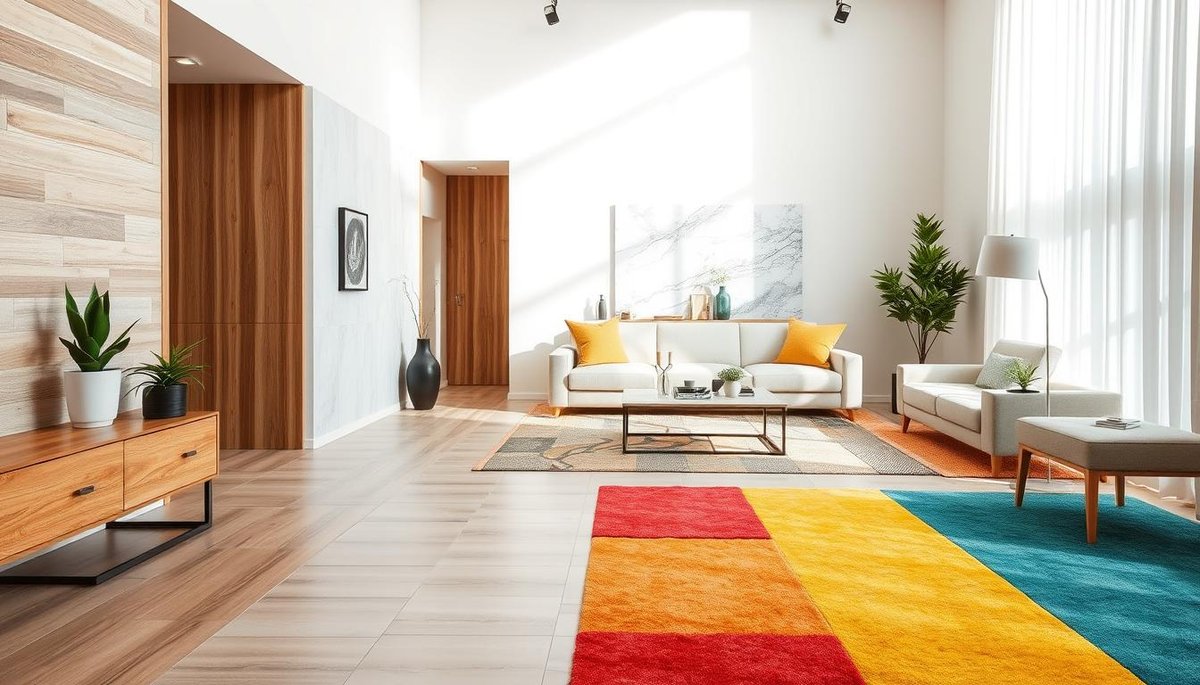
There’s a sequencing problem that shows up in a surprising number of interior projects — residential, hospitality, commercial — across Dubai and the wider region. The floor gets chosen last. Walls are painted, furniture is sourced, lighting is specified, and then someone looks down and realizes the flooring hasn’t been decided yet. It gets picked to match everything else rather than the other way around. For anyone serious about the quality and coherence of a finished interior, this is worth rethinking. The floor is the largest continuous surface in any space, and choosing the right terrazzo flooring in Dubai — or any premium flooring material — early in the design process changes the quality of every decision that follows.
The Floor Sets the Tone Before Anything Else Does
Walk into any well-designed space, and the floor is doing more work than most people consciously register. It establishes the room’s color temperature. It defines how light behaves — whether it reflects warmly or coolly, whether it bounces or absorbs. It communicates the material language of the space before a single piece of furniture has been placed or a single wall has been painted.
Choosing the floor first gives every decision that follows a fixed point to work from. Wall colors get picked in relation to it. Furniture finishes get chosen to either complement it or push against it. Lighting gets specified around how it performs at different times of day. The whole process gets easier because there’s already something concrete at the center of it.
Flip that around and the dynamic shifts entirely. A floor chosen last isn’t really designed — it’s negotiated. It has to work around wall colors that are already painted, furniture that’s already ordered, lighting that’s already fixed. The space ends up looking fine. Cohesive enough. But there’s a ceiling on how good it can be, and that ceiling was set the moment the floor became an afterthought.
Why Terrazzo Makes This Conversation Particularly Relevant
Not every flooring material demands early commitment in the same way. Timber, tile, and carpet can be specified relatively late in the process without dramatically affecting the broader design. Terrazzo is different — and that difference is actually one of its greatest strengths.
Epoxy terrazzo is a fully customizable system. The aggregate composition, the color of the binder, the size and distribution of the chips, the finish — all of these variables can be tuned to create something that is genuinely specific to the space it’s going into. That level of customization means terrazzo can anchor an interior in a way that off-the-shelf materials simply cannot. But it also means the decisions need to happen early, because the floor and the space need to develop together, not sequentially.
When an architect or interior design company in Dubai brings terrazzo into the conversation at the concept stage, the possibilities are significantly wider. Custom color palettes can be developed around the floor. Feature zones can be defined using changes in aggregate or pattern. The material language of the entire space can be built outward from a surface intentionally designed rather than reactively selected.
What Happens When It’s Specified Too Late
The consequences of leaving the flooring decision too late are usually subtle rather than dramatic — but they add up.
The most common outcome is a floor that feels disconnected from the rest of the space. It’s not wrong exactly, but it doesn’t quite belong either. It could have been in any number of rooms, and it would look about the same. The space works, but it doesn’t sing.
In hospitality projects — hotels, restaurants, lounges — this matters both commercially and aesthetically. The spaces that guests remember, that end up photographed and shared, that become part of a property’s identity, are almost always the ones where the floor was part of the design conversation from the beginning. A terrazzo floor designed in dialogue with the rest of the space reads very differently from one selected from a catalog at the end of a project. Guests may not be able to articulate the difference, but they feel it.
The same applies in high-end residential projects. A villa owner putting serious investment into a premium interior isn’t just paying for quality materials — they’re paying for a space that feels completely considered. A floor that was picked to go with the sofa rather than the other way around almost never delivers that.
The Practical Case for Starting With the Floor
Beyond the aesthetic argument, there’s a practical one. Flooring — particularly seamless systems like epoxy terrazzo — has installation dependencies that affect the sequencing of other trades on site. Getting the floor specified and detailed early means the project team can plan around it properly. Substrate preparation, curing time, protection requirements during subsequent trades — all of these need to be factored into the program, and they’re much easier to manage when the flooring decision has been made with enough lead time.
Late flooring decisions also tend to compress the time available for customization. When an epoxy terrazzo system needs to be designed, sampled, and approved in a tight window, the design possibilities narrow. Standard options get selected because there isn’t time to develop something more considered. The result is a floor that does the job but doesn’t do the work a properly designed terrazzo system is capable of.
Designing From the Ground Up
The phrase “designing from the ground up” is usually used metaphorically. In interior design, it’s also literal advice.
The most coherent, most resolved, most visually satisfying interiors are almost always those in which the floor was part of the initial design thinking — treated as a design element rather than a finishing material. In a region where premium interiors are the expectation rather than the exception, getting this sequencing right is one of the more practical things a design team can do.
Start with the floor. Let everything else follow from there. The difference in the finished result is visible—and it’s the kind of difference clients notice, even when they can’t quite explain why one space feels so much more considered than another.
Stay in touch to get more updates & news on Building Business News!