
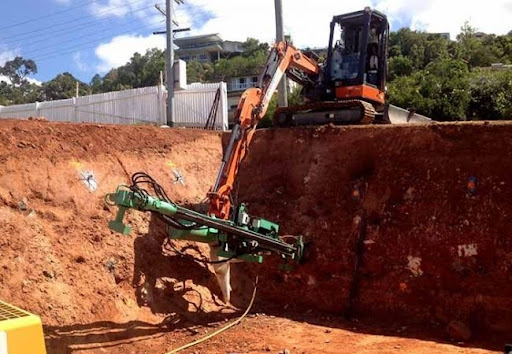
On most slope stabilization or foundation reinforcement jobs, the first thing engineers tend to worry about isn’t the anchor system itself—it’s whether the ground conditions in front of them match the geotechnical report. It is this difference between theory and practice that decides whether your rock anchoring contractors will leave behind a secure installation capable of withstanding years of pressure or one that can fail with the first rainfall.
Anchoring involves an amalgamation of precision drilling, geological analysis, and on-site intuition. It is not uncommon that two contractors will come up with two different ways of installing a rock face despite being presented with the exact same project. However, both ways are technically possible; only one way works within reality.
What rock anchoring contractors actually do on site
The role often gets oversimplified as “drilling and installing anchors,” but that description misses most of the complexity. A good contractor is constantly adjusting to rock variability, water ingress, and drilling resistance that changes meter by meter.
Anchors themselves—whether passive rock bolts or tensioned systems—depend heavily on installation quality. Hole alignment, grout consistency, and bond length all influence whether the system performs as designed. A few millimeters off in alignment might not sound critical, but over load cycles it can change stress distribution in the rock mass.
From what installers often report, one of the most underestimated tasks is managing grout behavior. Temperature, mix timing, and injection pressure all affect bond strength. In colder environments, grout viscosity alone can alter penetration depth, which then impacts load transfer.
This is where experienced rock anchoring contractors stand apart. They don’t just follow a drilling plan—they adapt it in real time based on rock response and equipment feedback.
Why contractor selection has long-term structural consequences
One thing many buyers overlook is how anchoring work rarely shows immediate results. A poorly installed system might pass initial load tests, only to gradually degrade under cyclic stress or groundwater movement.
In slope stabilization projects near infrastructure corridors, this becomes especially sensitive. Rail lines, highways, or retaining structures don’t tolerate slow failures. The margin for error is thin, and inspection intervals are long enough that early signs often go unnoticed.
A common mistake is selecting contractors purely on cost per meter drilled. That number doesn’t reflect drilling accuracy, corrosion protection practices, or post-installation testing rigor. In larger commercial solar installation groundwork or hillside facility development, these details end up influencing overall project reliability more than initial civil works budgets suggest.
There’s also the issue of documentation. Reliable contractors maintain detailed logs—drilling torque, penetration rates, grout volumes, and tensioning data. When those records are missing or incomplete, future inspections become guesswork rather than engineering verification.
Site conditions that separate routine jobs from difficult ones
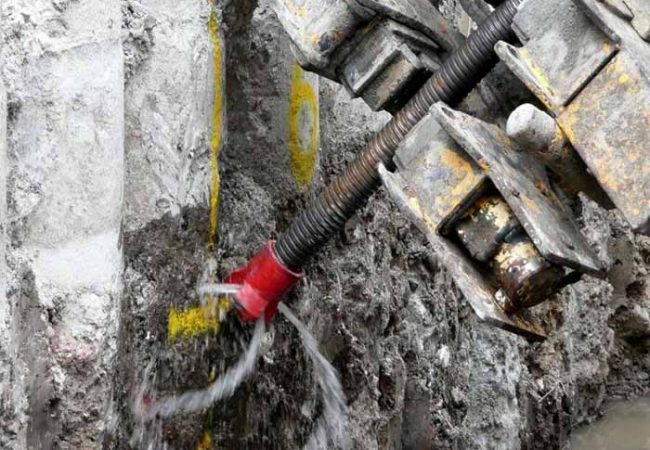
Rock anchoring work is rarely uniform. Even within a single site, conditions can shift from competent granite to fractured or weathered zones that behave almost like soil.
Wet formations introduce another layer of complexity. Water pressure behind rock faces can reduce effective bonding and create voids during grouting. Experienced teams adjust injection methods on the fly, sometimes switching to staged grouting or re-drilling sections that don’t meet expected resistance.
Access is another practical constraint that doesn’t get enough attention during planning. Steep terrain, limited crane reach, or restricted working hours near operational facilities can slow productivity more than drilling difficulty itself.
In renewable energy investment projects built on uneven terrain—such as hillside solar arrays or battery backup system installations tied to remote infrastructure—anchoring becomes part of the broader energy management strategy. Not just structural support, but site viability.
Evaluating technical capability beyond equipment lists
It’s easy to assume that modern rigs guarantee quality results. In reality, equipment is only part of the equation. Two contractors can use identical drilling rigs and produce very different outcomes depending on operator experience and supervision standards.
A practical indicator of competence is how contractors handle deviations from the original design. Do they pause and escalate engineering review, or adjust parameters independently based on field judgment? Neither approach is universally correct, but lack of coordination is usually where problems start.
Corrosion protection methods also vary more than expected. Not all of these methods for protecting concrete are interchangeable. Choosing the wrong option may decrease the system’s life span drastically, particularly in marine or humid areas.
If any work is related to building solar storage facilities or power grids, good anchoring is important for ensuring system stability. Movement in foundations can affect cable routing, equipment alignment, and maintenance access—issues that are expensive to correct after commissioning.
Cost, risk, and the reality of long-term performance
Pricing in rock anchoring rarely reflects just drilling depth or material cost. Mobilization, risk allowance for unpredictable geology, and testing requirements all factor into final bids. Contractors who price too cleanly often compensate later through change orders.
In practice, the most expensive projects are not the ones with higher upfront anchoring costs, but the ones that require remediation or rework after installation. That distinction becomes clearer over time, especially in infrastructure tied to continuous operation.
In installations for commercial purposes or at remote industrial sites, anchorage stability is also linked to operational reliability. Moving the anchorage points will affect access routes, mounting structures, or drainage routes—a minor problem that eventually becomes one of maintenance delays.
An experienced contractor always plans ahead for such eventualities as opposed to being a rare practice.
Final thoughts on choosing rock anchoring contractors
Selecting rock anchoring contractors is less about comparing quotations and more about assessing how they interpret ground behavior under uncertainty. Technical scope does make a difference, but so does judgment in uncertain circumstances.
The common denominator among projects that have performed well over the years is contractors who are thorough with their documentation, cautious about adaptation, and know that rock does not always behave consistently – even when surveys say it should.
The lesson to be learned from this experience cannot be overstated. It’s best to prioritize actual field experience, discipline in testing, and execution above all else rather than price alone.