
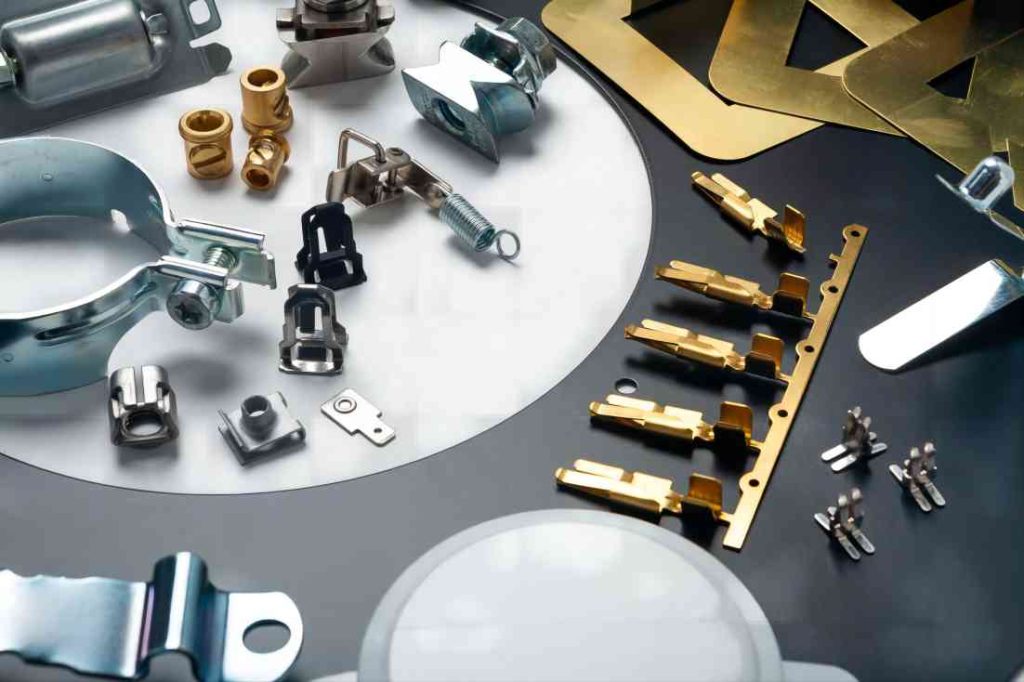
Medical devices operate under a level of scrutiny that most manufactured products never face, and the metal components inside them are no exception. Understanding what actually goes into the quality control process for medical stamping components helps explain why this particular manufacturing niche looks so different from general purpose metal stamping.
Where Medical Stamping Components Actually End Up
Medical stamping work supports a genuinely broad range of healthcare applications. Surgical instruments depend on stamped components that maintain accurate dimensions and stable performance throughout repeated use and sterilization cycles. Diagnostic equipment relies on precision components for testing and analytical devices, where measurement accuracy directly affects clinical decision making. Implantable medical devices require particularly small metal components where reliability and consistency are absolutely essential, given that these parts may remain inside a patient’s body for years. Broader healthcare equipment applications round out this range, calling for custom metal stamped components tailored to whatever specific function a given device needs to perform.
A Four Stage Approach to Quality Verification
Medical stamping work typically follows a structured quality control sequence rather than relying on a single inspection point at the end of production. Material inspection comes first, checking that incoming materials actually meet the specifications required for a given application before any forming even begins. This matters because a defect in raw material can propagate through an entire production run if it is not caught early.
Tooling verification follows, since stamping dies themselves need to be inspected and optimized regularly to maintain dimensional accuracy throughout a production run. Dies wear over time, even when built to high standards, and catching that wear before it affects part quality is a genuinely important part of maintaining consistency across a large production batch.
Dimensional inspection uses precision equipment to confirm that actual part dimensions meet the strict tolerance requirements medical applications demand, rather than relying on visual inspection or basic measurement tools that would not catch the kind of small deviations that matter in this field. Finally, final quality inspection checks finished components before they are shipped, serving as a last verification step before parts leave the factory and head toward integration into an actual medical device.
Certifications That Signal Genuine Commitment
Medical stamping manufacturers serious about this market generally hold a specific combination of certifications reflecting different aspects of quality and compliance. ROHS and REACH compliance address material safety and environmental considerations. ISO9001 and ISO14001 reflect broader quality and environmental management systems. IATF 16949, while originally developed for automotive suppliers, is sometimes held by manufacturers serving both automotive and medical markets, reflecting a demonstrated commitment to rigorous, auditable quality processes across their operations.
Secondary Processing Adds Another Layer of Complexity
Many medical stamping components require additional processing beyond the initial stamping step, including cutting, grinding, machining, and riveting, depending on what a specific component ultimately needs to achieve its final specifications. Each additional process introduces another point where quality needs to be maintained, which is part of why the overall quality control sequence needs to run consistently throughout the entire manufacturing process rather than being treated as a single final checkpoint.
Why This Level of Rigor Is Genuinely Necessary
It would be easy to view this kind of layered quality control as excessive for what are often very small, unassuming metal parts. But given how directly these components can affect patient outcomes, whether inside a surgical instrument, a diagnostic device, or an implantable product, the rigor applied to medical stamping reflects the actual stakes involved rather than being an arbitrary bureaucratic requirement. For medical device manufacturers sourcing these components, working with a supplier that genuinely follows this kind of structured quality process, rather than treating it as a checkbox exercise, makes a real difference in the reliability of the finished device.
Consistency Across a Full Production Run Is the Real Challenge
Producing a handful of perfect sample parts is a relatively achievable goal for most manufacturers. Maintaining that exact same level of quality consistently across a production run numbering in the thousands or more is a considerably harder standard to meet, and it is really where medical stamping quality control earns its reputation. A manufacturer that can demonstrate consistent dimensional accuracy from the first unit of a batch to the last, backed by the kind of ongoing tooling verification and dimensional inspection described earlier, is offering something genuinely more valuable to a medical device customer than one that can only point to strong performance on an initial sample set.