
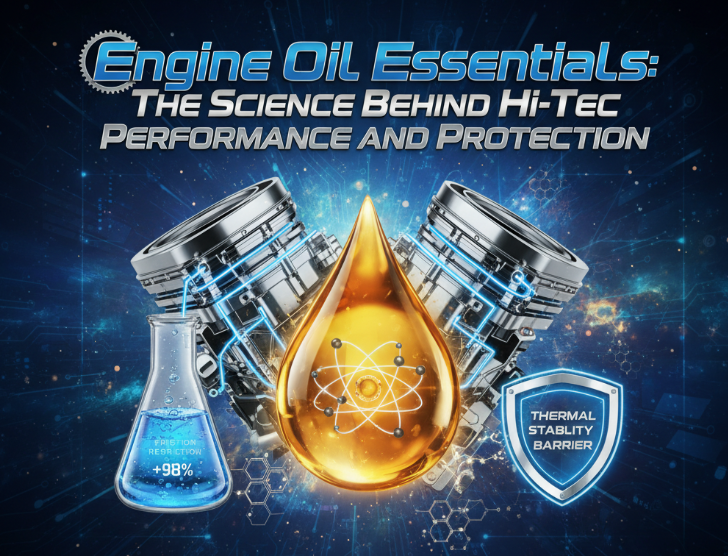
Think about your car’s engine for a moment. It’s an incredible piece of machinery with hundreds of moving parts. Every time you turn the key, pistons fire thousands of times per minute. Crankshafts spin at dizzying speeds. Valves open and close with perfect timing. All these metal components would destroy themselves within minutes without one crucial element: engine oil.
Most drivers take oil for granted. We know we need to change it regularly. However, few of us truly understand what’s happening under the hood. Engine oil does far more than simply making things slippery. It’s actually a sophisticated fluid engineered to handle extreme conditions. From freezing winter mornings to scorching summer highway drives, your oil works tirelessly. It protects, cleans, cools, and even helps your engine run more efficiently. That’s why choosing the right oil matters so much more than most people realize.
Why Engine Oil Matters More Than You Think
Let’s be honest: modern engines are pretty demanding. They create environments that would seem almost hostile to survival. Temperatures inside combustion chambers regularly exceed 200 degrees Celsius. That’s hot enough to boil water instantly. At the same time, pressures build up to levels that could crush most materials. Your engine oil faces these brutal conditions every single day.
What’s really impressive is how oil multitasks under such stress. It’s constantly reducing friction between metal surfaces that move at incredible speeds. It pulls heat away from components that would otherwise melt. Beyond that, it acts like a microscopic garbage collector. Tiny particles of dirt, metal shavings, and combustion byproducts get suspended in the oil. This prevents them from scratching delicate surfaces. The oil also fights rust and corrosion. When you think about everything your oil does, choosing the right one becomes pretty important.
The Evolution of Engine Oil Technology
Decades ago, things were simpler with engine oils. Traditional mineral oils ruled the market. These were basically refined crude oil with some additives mixed in. They did the job reasonably well for older engines. However, they had some serious drawbacks that became more obvious over time.
The biggest problem was how quickly mineral oils broke down. High temperatures would cause them to degrade and lose effectiveness. Cold weather created different headaches. Anyone who’s lived through harsh winters knows the struggle. Your car would barely start because the oil had turned into thick sludge overnight.
Everything changed when synthetic oils hit the scene in the 1970s. Engineers started building these lubricants molecule by molecule in laboratories. Instead of just refining what nature provided, they created exactly what engines needed. The difference was remarkable. Synthetic oils flowed beautifully in freezing temperatures. They also stayed stable when things got really hot.
The innovation didn’t stop there. Companies kept pushing boundaries and developing better formulations. Today’s advanced oils represent decades of research and testing. They last longer between changes. They help your car burn less fuel. Most importantly, they keep engines running smoothly for hundreds of thousands of miles.
Understanding Hi-Tec Oil Formulations
When we talk about Hi-Tec Oils, we’re really discussing the cutting edge of lubrication technology. These aren’t your grandfather’s motor oils. They represent years of scientific advancement and real-world testing. The formulations use incredibly refined base stocks. Then they add carefully selected additive packages that boost performance. The result? Products that outperform standard oils in every way that matters.
Creating these premium oils involves serious precision. Scientists don’t just throw ingredients together and hope for the best. They carefully select specific molecular structures for optimal characteristics. Each component gets chosen for a reason. The base oils provide stability. The additives enhance specific properties. Everything works together like a well-rehearsed orchestra.
Here’s what really sets these formulations apart: they handle punishment better. Put them under extreme heat, and they stay stable. Push them through thousands of miles, and they maintain their protective qualities. Other oils start breaking down and losing effectiveness. Meanwhile, premium formulations keep protecting your engine like new.
Key Components of Premium Engine Oils
Base oils form the foundation of any lubricant. They comprise 70-95% of the final product. Premium formulations use Group III, IV, or V base stocks. These materials offer superior oxidation resistance and thermal stability.
Viscosity modifiers help oil maintain proper thickness. They prevent thinning at high temperatures. Similarly, they reduce thickening during cold weather. This ensures adequate flow during startup.
Detergents keep engine internals clean by preventing deposit formation. Dispersants suspend contaminants in the oil. Anti-wear additives create protective films on metal surfaces. Meanwhile, antioxidants extend oil life by preventing degradation.
How Advanced Oils Protect Your Engine
Friction causes significant power loss in engines. Premium oils reduce this friction dramatically. Their molecular structure creates slippery surfaces between components. Thus, less energy gets wasted as heat.
Moreover, advanced formulations provide superior cold-start protection. Traditional oils thicken in cold weather. This delays lubrication to critical components. However, modern synthetics flow readily even at minus 40 degrees.
High-temperature protection represents another crucial advantage. Engines generate intense heat during operation. Inferior oils break down under these conditions. Conversely, premium formulations maintain their protective properties throughout extended drain intervals.
The Role of Professional Expertise
Selecting appropriate oil requires specialized knowledge. A lubrication training specialist can provide invaluable guidance. These experts understand the nuances of different formulations. They also know which products suit specific applications.
Professional training covers oil chemistry, additive technology, and application requirements. Specialists learn to match products with operational demands. Furthermore, they understand contamination control and oil analysis procedures.
Working with trained professionals ensures optimal lubrication strategies. They can identify potential problems before they cause damage. Additionally, they recommend maintenance intervals based on actual operating conditions.
Benefits of Upgrading to Premium Lubricants
Extended drain intervals save time and money. Premium oils last significantly longer than conventional alternatives. Therefore, vehicles require less frequent servicing. This reduces both labor costs and environmental impact.
Improved fuel economy delivers ongoing savings. Reduced friction means engines work more efficiently. Studies show synthetic oils can improve fuel efficiency by 2-5%. Over time, these savings offset the higher initial cost.
Enhanced engine protection extends component life dramatically. Wear rates decrease substantially with premium oils. Consequently, engines run longer before requiring major repairs. This represents significant long-term value.
Choosing the Right Oil for Your Vehicle
Manufacturer specifications provide essential guidance. Always check your owner’s manual for recommended viscosity grades. These recommendations reflect extensive engineering and testing. Deviating from them can void warranties.
Operating conditions influence oil selection significantly. Severe service requires more robust protection. High-performance driving, towing, and extreme temperatures constitute severe conditions. Such applications benefit most from premium formulations.
Oil certifications indicate quality and performance levels. Look for API, ILSAC, or ACEA specifications. These organizations establish rigorous testing standards. Products meeting these standards deliver proven performance.
Common Myths About Engine Oil
Many believe thicker oil always provides better protection. However, this isn’t true. Excessively thick oil restricts flow during cold starts. It also increases friction and reduces efficiency. Always use the recommended viscosity.
Some think all synthetic oils are identical. Actually, formulations vary dramatically between brands. Quality depends on base stocks and additive packages. Premium products justify their cost through superior performance.
Another myth suggests frequent oil changes compensate for inferior products. While regular maintenance helps, it cannot overcome inadequate lubrication. Quality oil provides protection that change intervals alone cannot achieve.
The Future of Engine Lubrication
Emerging technologies continue advancing oil performance. Low-viscosity formulations reduce friction while maintaining protection. These oils help automakers meet stringent fuel economy standards. Meanwhile, they extend engine life.
Environmental concerns drive innovation in lubricant development. Biodegradable base stocks reduce ecological impact. Additionally, longer drain intervals decrease waste oil generation. These advances benefit both consumers and the environment.
Electric vehicle technology introduces new lubrication challenges. Transmission fluids must handle extreme torque loads. Thermal management fluids require special properties. The industry continues developing solutions for these applications.
Conclusion
Engine oil technology has evolved dramatically over recent decades. Modern formulations deliver unprecedented protection and performance. Investing in premium lubricants protects your most valuable automotive asset. Furthermore, it provides long-term cost savings through improved efficiency and extended component life.
Understanding lubrication science empowers better maintenance decisions. Quality oils prevent costly repairs and maximize engine longevity. Therefore, choosing advanced formulations represents wise financial planning. Your engine deserves nothing less than the best protection available.