
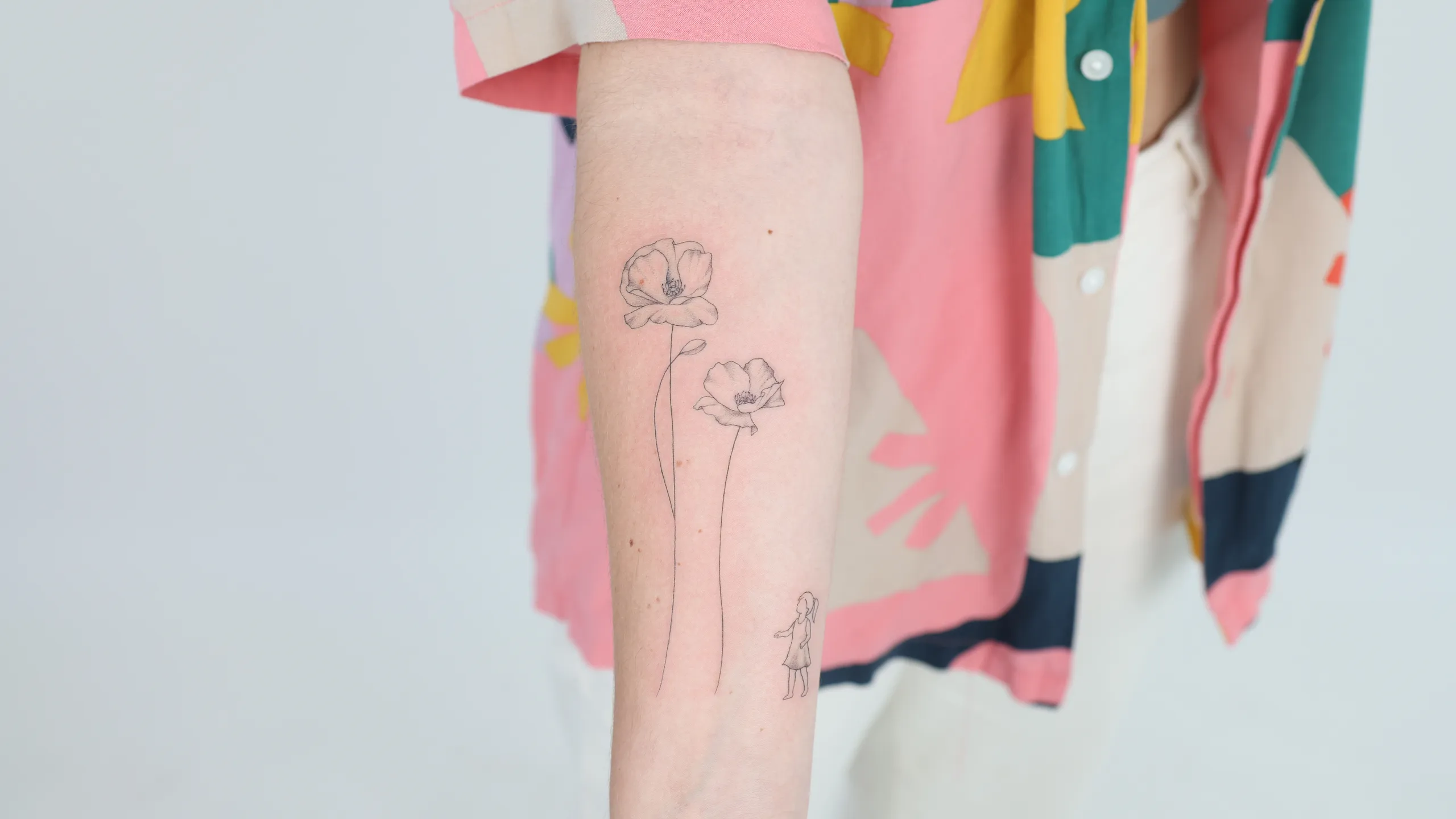
Every tattoo you’ve admired, whether it’s a bold traditional rose, a delicate botanical sleeve or a geometric mandala, rests on one thing: its lines.
Linework is the skeleton of a tattoo. It sets the shape, holds the colour and shading in place, and decides how well the piece will age over the years. If the lines are shaky, blown out or uneven, even the most beautiful shading can’t save the design.
For aspiring artists and tattoo lovers alike, knowing how lines work is the first step to telling a good tattoo from a great one. This article covers the main types of tattoo lines, the techniques behind clean linework, common mistakes, and how to build the skills that make linework look effortless.
Why Lines Matter So Much in Tattooing
Lines do more than outline a design. They give it structure, depth and readability. A well-placed line guides the eye, separates elements and creates contrast between light and dark areas. In styles like American traditional, bold outlines keep the design readable from across the room and stop colours from bleeding into each other as the skin ages.
Lines also affect how a tattoo heals and settles. Ink spreads slightly under the skin over time, so artists must judge line weight and spacing carefully. Lines placed too close together can merge after a few years and turn a crisp design into a blurry patch. This is why experienced artists think about how a tattoo will look ten or twenty years from now, not just the day it’s finished.
The Main Types of Tattoo Lines
Different styles call for different kinds of linework. Here are the most common types you’ll see in studios across Australia and around the world:
- Bold outlines: Thick, heavy lines usually made with larger round liner groupings. They’re the signature of traditional and neo-traditional work and are known for ageing extremely well.
- Fine lines: Thin, delicate lines made with single needles or small groupings. They suit minimalist designs, script, florals and micro-realism.
- Whip lines and tapered lines: Lines that go from thick to thin in one smooth motion. They add movement and are often used in hair, feathers and organic shapes.
- Dotwork lines: Lines built from a series of dots rather than one continuous stroke, common in geometric and mandala designs.
- Variable-weight lines: Lines that change thickness to suggest depth, light source or perspective. They help bring illustrative tattoos to life.
Each type takes its own skills, needle choice and machine setup, which is why many artists choose to specialise in one or two linework styles.
Fine Line Tattooing: A Growing Speciality
Over the past decade, fine line tattooing has become one of the most requested styles in Australia. Its subtle, elegant look appeals to first-time clients and anyone who wants something understated. But fine line work is often more demanding than bold work. There’s very little room for error: a slight wobble, wrong depth or uneven pressure shows straight away.
Fine lines also need careful thought about longevity. Because the lines are so thin, they can fade or blur if the needle goes too deep or too shallow. Artists who want to master this style often get structured training, such as a dedicated fine line tatoo course, to learn needle selection, depth control and design principles that help delicate work last.
Techniques for Clean, Consistent Linework
Clean lines come from practice, but certain techniques help artists improve faster. Here are the basics most professionals rely on:
- Stretch the skin properly: Taut skin gives the needle a stable surface. Poor stretching is one of the most common causes of wavy lines.
- Keep a steady hand speed: Moving too fast can leave patchy lines, while moving too slowly can overwork the skin and cause blowouts.
- Find the right needle depth: Ink should sit in the dermis. Too shallow and it falls out during healing; too deep and it spreads under the skin.
- Anchor your hand: Resting your hand or little finger on the client’s skin gives you a pivot point and better control.
- Pull lines towards yourself: Many artists find it easier to keep lines straight and even when they pull towards their body.
- Tune your machine: Voltage, stroke length and needle grouping all affect how the line forms. Learning to adjust these settings is key.
For a visual guide to these techniques, this YouTube tutorial is a helpful starting point: Lining Guide for Beginners – How To Tattoo Solid Lines.
Common Linework Mistakes to Avoid
Even talented artists make linework mistakes early on. Knowing them helps you spot and fix problems before they become habits:
- Blowouts: Ink spreading beyond the intended line, usually from going too deep or stretching the skin badly.
- Shaky or wobbly lines: Often caused by nerves, poor hand support or rushing.
- Overworking the skin: Going over the same line too many times damages the skin and slows healing.
- Inconsistent line weight: Unintended changes in thickness that make the design look unbalanced.
- Ignoring the stencil: Drifting from the stencil can distort proportions, especially in lettering and geometric work.
Hygiene and Safety: The Foundation Behind Every Line
Technical skill means nothing without proper hygiene. In Australia, tattooing is regulated as a skin penetration procedure, and artists must follow strict infection control standards. This includes using single-use needles, sterilising reusable equipment, wearing gloves and keeping a clean workspace.
NSW Health provides clear guidance for tattooists and clients on safe practice, aftercare and regulatory requirements. Its tattooing fact sheet is a valuable resource for anyone entering the industry or getting their first tattoo. Following these standards protects clients, artists and the reputation of the industry as a whole.
How to Practise and Improve Your Linework
Building strong linework skills takes time, patience and regular practice. Here are some practical ways to improve:
- Practise on synthetic skin: It lets you build muscle memory without risk to a real client.
- Draw every day: Strong pen-and-paper skills lead directly to better lines on skin.
- Study other artists’ work: Look closely at healed tattoos, not just fresh ones, to see how lines hold up over time.
- Get feedback from mentors: An experienced eye can spot habits you might miss.
- Invest in formal education: Structured courses give you a clear path, professional guidance and a strong grounding in technique and safety.
Conclusion
Lines are the heartbeat of every tattoo. They shape the design, hold everything together and decide how well the artwork stands the test of time. Whether you’re drawn to bold traditional outlines or the quiet elegance of fine line work, learning linework is essential for any serious tattoo artist.
With dedication, the right techniques and a firm commitment to hygiene and safety, any artist can turn a simple stroke into something lasting. A great tattoo isn’t just about what’s inside the lines. It’s about the lines themselves.