
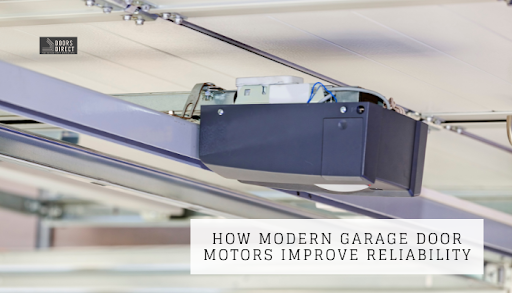
Modern garage door motors improve reliability by managing heat, load, and mechanical stress in ways older units couldn’t. The result is a motor that runs longer, fails less, and handles Brisbane’s conditions without breaking down at the worst possible time.
Older motors had none of that. They ran at full power from the first cycle to the last, with no way to detect strain, regulate temperature, or keep the door moving through a power outage. That’s not a design flaw so much as a limitation of the technology available at the time.
At https://www.doorsdirect.com.au, we’ve installed and serviced automatic garage door systems across Brisbane long enough to see exactly where those limitations show up. This article walks you through what’s changed in modern garage door openers, why today’s motors are more reliable, and what those improvements mean for you.
Let’s get into it.
Where Older Garage Door Motors Used to Fail
Older garage door motors lacked many of the features that make modern systems more reliable today. Back then, managing heat, detecting strain, and protecting against power surges were all common weak points.
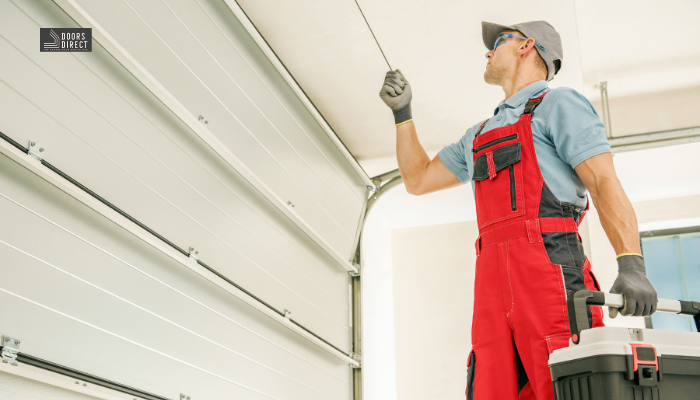
Heat was the most consistent problem. Every time the motor opens or closes, it generates heat. Older models had limited ways to deal with that buildup, so repeated use or hot weather could put extra stress on the motor over time.
They also couldn’t detect when the door was under strain. If it became harder to lift because of worn springs or a track that needed attention, the motor kept working just as hard. That extra strain could speed up wear on both the motor and other parts of the system.
Power surges were another weak point. A sudden spike in electricity, especially during a storm, could damage electronic components because many older motors offered little protection against surges.
The Technology Behind Modern Motor Reliability
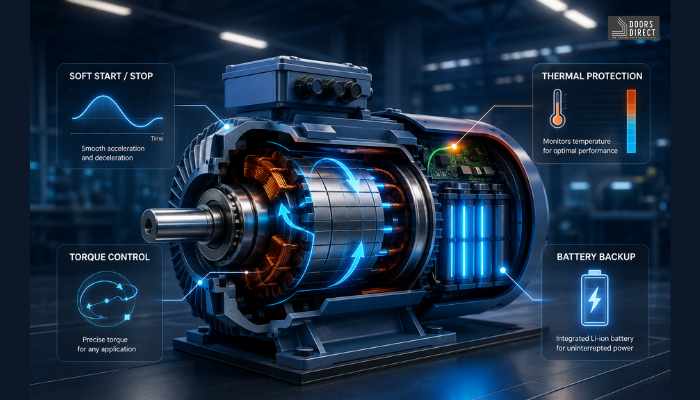
Manufacturers rebuilt the way modern motors handle force, heat, and power loss. Those improvements are what drive modern motor reliability. Four features do most of the heavy lifting here: soft start and stop, torque control, thermal protection, and battery backup. Below, we go through each one.
Soft Start and Stop Reduce Wear on Parts
Soft start and stop means the motor gradually ramps up when opening and slows down before the door reaches the end of its travel. This smoother movement reduces mechanical wear by limiting the stress placed on the opener and other components.
That’s very different from how older motors worked. They often went from zero to full force as soon as they started. Every cycle sent a jolt through the drive system, springs, and door hardware. Over time, those repeated jolts accelerated wear across the whole system. Soft start and stop reduce that stress, so the whole system lasts longer and needs fewer repairs.
Torque Control Prevents Jamming and Strain
In simple terms, torque control means the motor can adjust how much force it uses as the door moves. Think of it like the brakes on a car. When a driver senses resistance ahead, they ease off instead of accelerating into it. A modern garage door motor works much the same way.
In practice, that means it can react when something makes the door harder to move. If it meets extra resistance because of a stiff track, a worn spring, or an obstruction, the motor senses the added load and reduces its output. This automatic adjustment helps prevent damage to the drive system and other components.
Older motors weren’t nearly as good at this. Many simply kept pushing at full power, so a minor obstruction could end up causing serious damage to the drive system. That ability to respond to changing conditions helps keep the entire system running reliably, even when things aren’t running as smoothly as usual.
Thermal Protection Stops Overheating Failures
Modern motors monitor their own temperature and adjust their performance to avoid overheating (which is pretty useful in a climate like ours). Without this protection, a motor can keep pushing until it overheats on extremely hot days. In some cases, the door can stop mid-cycle just when you need to get in or out.
Thermal protection prevents that by regulating the motor’s workload as temperatures rise, so it keeps functioning reliably instead of cutting out. For Australian homes, especially garages that trap heat over summer, it’s often what keeps a motor running reliably through the hottest months of the year.
Battery Backup Keeps the Door Working During Outages
Australia experiences around 11 cyclones per year, with about 4 of those crossing the coast. These events regularly cause widespread power outages across affected regions. Tropical Cyclone Alfred in March 2025 alone left a peak of 346,000 Energex customers without power across Southeast Queensland.
In situations like these, a garage door motor without battery backup becomes another inconvenience. You’re left relying on manual operation until power is restored.
That’s why battery backup is now a standard feature in modern garage door openers. The battery kicks in automatically when the power goes out, so the door keeps working without any manual intervention.
You don’t have to worry about the battery running flat anytime soon, either. Most systems provide around 20 full open-and-close cycles on a single charge, which is enough for a typical outage.
Motors like the Merlin SilentDrive Essential and SilentDrive Elite are good examples of how these features come together in practice. Both are built for Australian conditions, with the Elite adding battery backup compatibility for homes that want full outage protection.
What You’ll Actually Notice Day to Day
All of this technology sounds great on paper, but what does it actually change for you, the person using the door every morning and evening? Here’s what tends to stand out once you’ve got a modern motor running:
- Quieter Operation: No more grinding, clunking, or that jolt when everything starts moving.
- Consistent Performance: Opens and closes the same reliable way through summer heat, storm season, and everything in between.
- Fewer Breakdowns: Because the parts aren’t under constant strain, there’s simply less to go wrong.
- Keeps Working During a Blackout: Thanks to battery backup, a power cut doesn’t mean you’re locked out or stuck inside.
- Remote Access from Your Phone: Check whether it’s open, closed, or left open by mistake without walking back to check.
- Enhanced Security Features: Many modern openers use rolling code technology. The remote’s access code changes every time you use it, making the signal much harder to intercept and reuse.
Together, these features create a garage door that operates more reliably with less maintenance. And honestly, that’s the whole point of a garage door motor. It’s meant to be one less thing on your mind.
How Long Modern Garage Door Motors Typically Last
Modern garage door motors typically last 10 to 15 years with average use. That said, several factors affect how long a particular motor will last. The table below breaks down the most important ones.
| Motor Type | Typical Lifespan | Common Failure Point |
| Older basic motor (no torque control) | 8–10 years | Gear and chain wear from constant full-force operation |
| Standard modern motor | 12–15 years | Rare mechanical wear, mostly age-related |
| Smart motor with battery backup | 15+ years | Very few; backup and thermal protection reduce strain significantly |
As a general rule, the more a motor can sense and adapt to changing conditions, the longer it tends to last. That’s why modern motors outperform older ones. They’re stronger, yes, but they’re also smarter about how they use that strength.
Is It Time to Upgrade Your Garage Door Motor?
It is, if your motor is making grinding or clunking noises, hesitating mid-cycle, or struggling through summer heat. Age is another signal. Most motors older than 10 years are already operating past their most reliable years.
And if you want an honest opinion from someone who’s seen it all, get in touch with our team at Doors Direct. We’ve been installing and servicing garage door motors across Brisbane for almost two decades.
Give us a call on 07 3161 5963, send a text to 0401 444 055, or email [email protected]. We’ll take a look and give you a straight answer. No pressure, either way.