
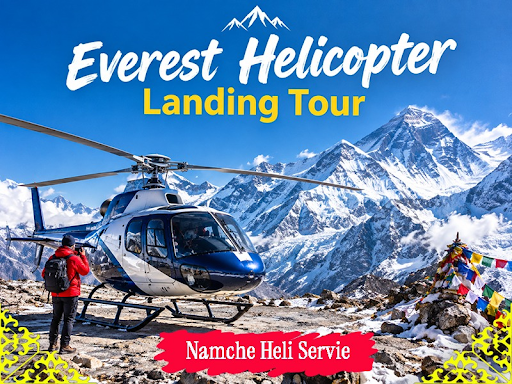
Most people who dream about the Himalayas run into the same wall: time. A proper Everest trek eats up around two weeks, and not everyone has that to spare, or the knees for it. That’s where flying starts to make sense. But the Everest region isn’t one single place you simply “go to.” Kathmandu, Lukla and Lobuche are three very different stops, and the way a helicopter links them is nothing like the old walking route through the Khumbu. An Everest Base Camp Helicopter Tour squeezes days of trail into a few hours in the air, which is great, but it also comes with rules about weather, altitude and where a pilot can actually put the aircraft down. This guide walks through the routes, the stops and the limits, so you know what you’re signing up for before you pick a date.
How the Kathmandu–Lukla–Lobuche Helicopter Route Works
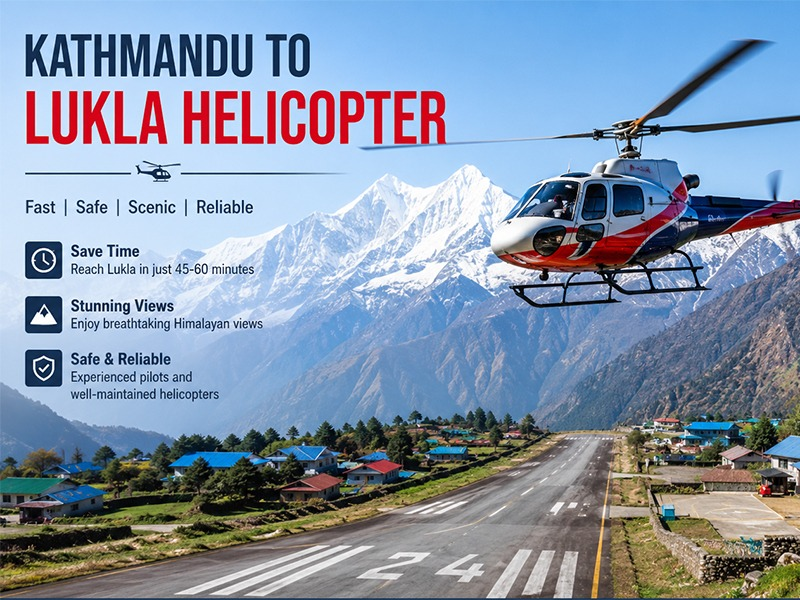
Think of the journey as a ladder. Kathmandu sits in a valley at roughly 1,400 metres, Lukla is higher up in the Khumbu, and Lobuche is higher again, well past 4,000 metres. A helicopter lets you step onto different rungs without climbing every one in between.
Kathmandu to Lukla
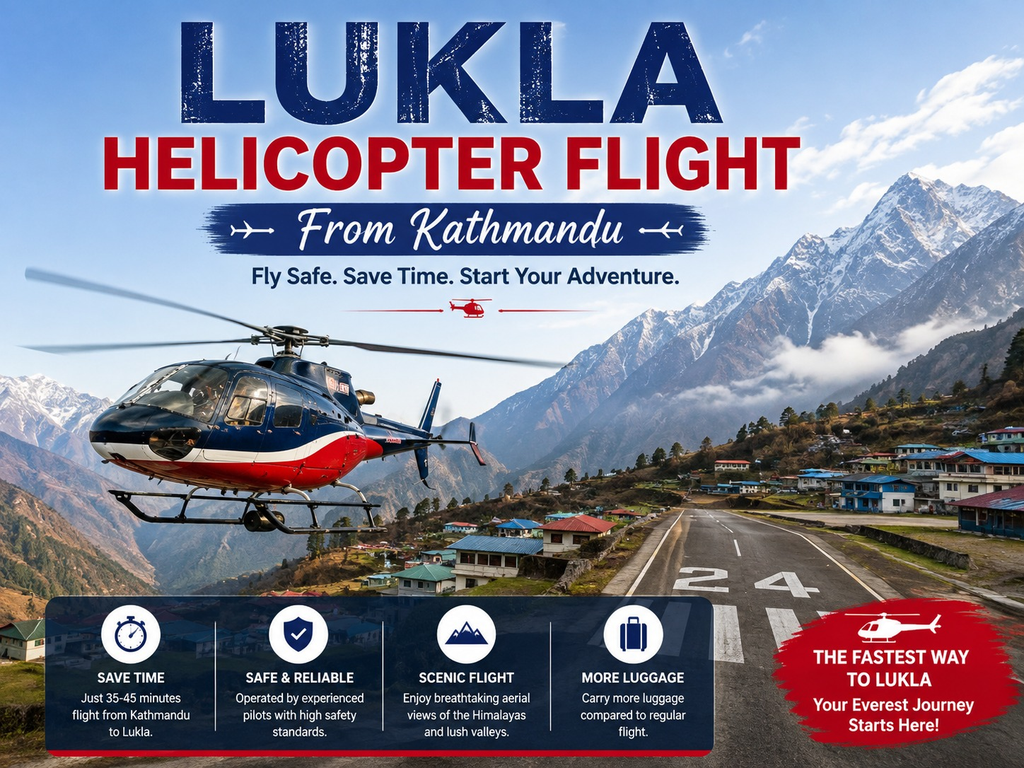
Lukla is the front door to the Khumbu. Nearly every trekker starts there, landing at Tenzing-Hillary Airport, a short mountain airstrip that is famously fussy about weather. Most people take a regular small plane. A Kathmandu to Lukla helicopter is the alternative when you want more flexibility, or you’re travelling as a group and would rather have the aircraft to yourselves. Either way, you skip a very long overland trip.
Lukla to Lobuche
Lobuche matters because it sits on the main trail toward Everest Base Camp, up in the thin-air part of the valley. The altitude gain from Lukla is big, roughly 2,000 metres. A helicopter saves you the walking, not the altitude. Whether you can land, and exactly where, depends on weather, operating conditions and permissions on the day.
Lobuche as an Everest-Region Helicopter Point
Lobuche is a cold, open spot on the trekking corridor, which makes it a practical pickup or drop-off for people already up the valley. Seeing the region from the air is one thing. Walking through it, step after step, is another.
Lobuche to Kathmandu: What Travelers Should Know
Plenty of people trek up to Lobuche and then realise they don’t fancy walking all the way back down. Others get there and the body simply says no. A Lobuche to Kathmandu Helicopter exists for exactly that situation. It lifts you out of the high Khumbu and puts you back in the capital without retracing the whole trail.
It’s a different thing from leaving Lukla, though. Lobuche is far higher, the air is thinner, and the weather swings faster, so a pilot has less room for error. Flights can be delayed, rerouted or landed somewhere other than planned. Don’t lock in a landing time unless your operator has confirmed it, and even then treat it as a good estimate rather than a promise. If you’ve got a connecting international flight, give yourself a spare day.
What an Everest Base Camp Helicopter Tour Actually Gives You
From the air, the Khumbu looks like nothing you’d get on foot. Glaciers, rubble-strewn valley floors, tiny villages strung along the trail, and then the big names: Everest, Nuptse, Lhotse and Ama Dablam, depending on cloud and the route flown. It suits travelers who are short on time, families, older travelers, or anyone who can’t manage a multi-day trek.
One distinction trips people up. Flying over the Everest region is not the same as landing in it. Landings at viewpoints or designated spots depend on weather, aircraft limits and permissions, so nobody should treat a specific landing as guaranteed. That includes places like Kala Patthar. Ask your operator what’s realistic before you pay.
The helicopter gives you the big picture quickly. Trekking gives you the slow version: villages, trail life, the way the light changes through the day.
Kathmandu, Lukla and Lobuche Are Three Very Different Travel Experiences
Kathmandu — The Starting Point
Loud, dusty, busy. This is where you deal with hotels, airport logistics and last-minute shopping for a warm layer. It’s also a sharp contrast to the quiet mountains ahead.
Lukla — Where the Mountain Journey Begins
A small settlement on a slope, built around the airstrip. Everyone there is either just arriving or about to leave. Road-and-city Nepal ends here, and the Khumbu begins.
Lobuche — The High-Altitude Khumbu
Sparse, cold and exposed. The air is thin enough that even simple things feel harder. Of the three stops, this is where the journey feels the most different, and it’s the reason arriving by helicopter needs more thought than people expect.
Practical Things to Check Before Flying
Weather and visibility
Mountain weather turns quickly. Pilots need decent visibility, so a clear morning doesn’t guarantee a clear afternoon, and a flight that ran yesterday might not run today.
Altitude
Flying up fast skips gradual acclimatization. Altitude sickness doesn’t care how you arrived, so take it seriously even if you haven’t walked a single step.
Weight and luggage
Operators set passenger and baggage limits. Ask for the exact figures before you pack, not at the helipad.
Landing locations
Landing depends on conditions, permissions, weather and the aircraft itself. Don’t assume an Everest Base Camp or Kala Patthar landing will happen automatically.
Buffer time
If you have international flights or fixed onward plans, leave some slack. Delays happen.
What Happens on the Flight Day?
The day usually runs like this: Kathmandu, airport and flight preparation, Lukla or the upper Khumbu, the mountain flight itself, a landing or viewpoint if conditions allow, then the return.
Expect an early start, since mornings are often clearer in the mountains, though that depends on your itinerary. Weather and aviation conditions are checked before departure, and the actual route can change on the day. Keep your expectations flexible. Once you’re at the aircraft, follow the crew’s instructions, especially during landing and takeoff.
Choosing the Right Route: Kathmandu–Lukla, Lukla–Lobuche or Lobuche–Kathmandu?
| Route | Main purpose |
| Kathmandu → Lukla | Reaching the Khumbu gateway quickly |
| Lukla → Lobuche | Connecting with the upper Everest region |
| Lobuche → Kathmandu | Returning from the high Khumbu without retracing the entire trek |
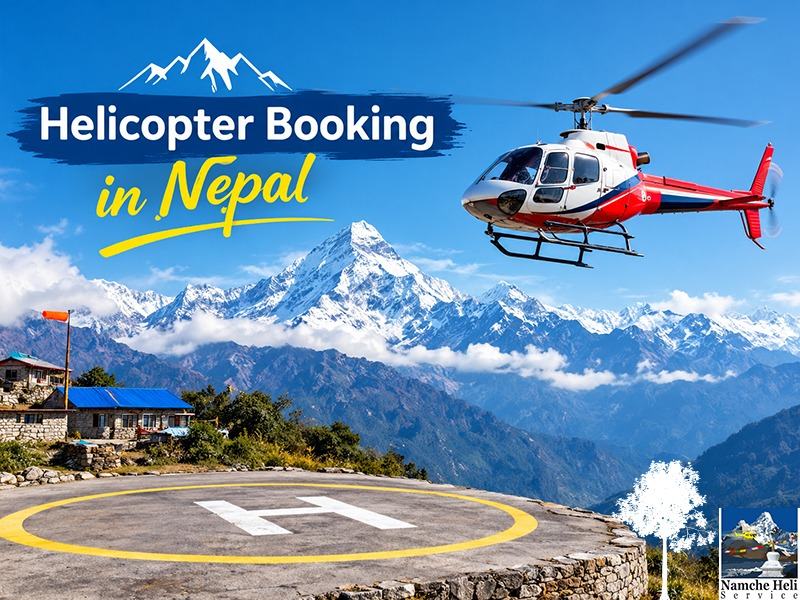
There’s no ranking here, only fit. A Kathmandu to Lukla Helicopter suits someone who wants a quick start. A Lukla to Kathmandu helicopter works for people finishing up lower in the valley. A Lobuche to Kathmandu helicopter is for those coming down from the high Khumbu. When comparing operators and route arrangements, travelers often look at providers such as Namcheheli, so compare what each one actually offers.
Helicopter Travel vs. Trekking: What You Gain and What You Miss
Helicopter travel gives you speed, aerial views and less walking, and it opens the region to people with limited time. Trekking gives you gradual acclimatization, more time in villages, and a real feel for how the landscape changes as you climb.
A helicopter isn’t simply a faster version of the trek. It creates a different kind of Everest experience. Neither one is better for everybody.
Final Thoughts: Flying Into the Everest Region
Kathmandu, Lukla and Lobuche show three sides of the Everest region, and a helicopter lets you see them in a much shorter itinerary. Just go in knowing the limits: weather, altitude, landing conditions and route changes. Plan around those, and the flight becomes a lot less stressful.
Frequently Asked Questions About Everest Helicopter Routes
Can I take a helicopter from Kathmandu to Lukla?
Yes, it’s an option, though availability and operating conditions can vary.
Can I fly by helicopter from Lukla to Kathmandu?
Yes. Weather and operational conditions decide whether a given flight goes ahead.
Is a Lobuche to Kathmandu helicopter available?
It’s used to return from the high Khumbu without walking back down, but high-altitude operations depend heavily on conditions.
Does the Everest Base Camp Helicopter Tour land at Everest Base Camp?
Not automatically. Flying over the area, landing at designated spots and landing at Base Camp are different things, so confirm with your operator.
Is flying to Lobuche safe because I do not have to trek?
Skipping the walk doesn’t remove altitude risk. Rapid arrival at height can still affect you.
What happens if the weather is bad on helicopter flight day?
Expect delays, route changes or cancellation, depending on aviation conditions and your operator’s policy.
Contact Details
———————————-
Namche Heli Service
Namche Bazzar, Solukhumbu, Nepal
(Branch Office :Kathmandu Naya Bazar)
+977-985-2850192 (WhatsApp)
Email: [email protected]
URL: www.namcheheli.com