
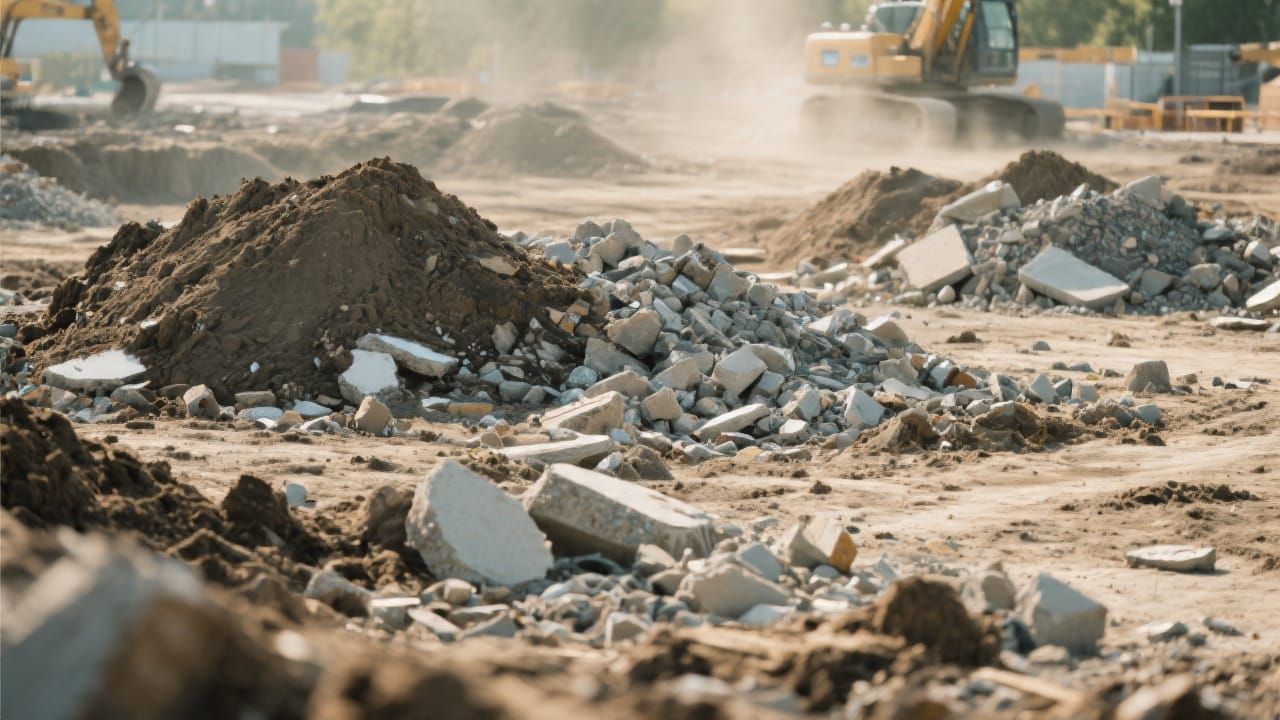
Every construction project has friction points – delays, inefficiencies, and hidden costs that quietly eat into your margins. These jobsite bottlenecks in construction often come from material handling, transportation, and workflow gaps that are easy to overlook but expensive to ignore. The good news is that many of these issues can be solved with the right tools. By integrating modern recycling equipment like a compact crusher directly into your workflow, you can streamline operations, reduce downtime, and dramatically improve overall productivity.
In this article, we break down five of the most common bottlenecks on construction sites – and how a compact crusher for construction sites can help eliminate them.
1. Material Hauling Delays
One of the biggest inefficiencies on any jobsite is the constant need to haul debris off-site. Trucks line up, schedules shift, and your crew often ends up waiting for material to be removed before continuing work.
The problem:
- Limited truck availability
- Traffic delays
- High fuel and labor costs
- Workflow interruptions
The solution:
A compact crusher allows you to process material directly on-site, eliminating the need for constant hauling. Instead of waiting for trucks, your team can keep working while debris is turned into reusable aggregate.
This is one of the fastest ways to improve construction site efficiency, especially on projects where large volumes of concrete or asphalt are involved.
2. Material Shortages and Reordering
Another common bottleneck is running out of base material mid-project. Waiting for new deliveries slows progress and creates scheduling headaches.
The problem:
- Unexpected material shortages
- Delivery delays from suppliers
- Rising material costs
The solution:
By crushing existing debris on-site, you create your own supply of usable material. This reduces dependency on external suppliers and ensures you always have what you need when you need it.
Understanding the on-site crushing equipment benefits helps contractors shift from reactive ordering to proactive material management.
3. Jobsite Congestion and Limited Space
Urban and residential jobsites often suffer from tight working conditions. Stockpiles of debris and incoming materials quickly create clutter, making it harder for crews and machines to move efficiently.
The problem:
- Limited staging space
- Increased safety risks
- Slower equipment movement
The solution:
A compact crusher for construction sites is designed to operate in tight spaces. Instead of accumulating large piles of waste, material is processed continuously, reducing clutter and improving site organization.
Less congestion means safer operations and faster task completion.
4. Material Handling and Double Work
Handling the same material multiple times is a hidden cost that many contractors underestimate. Loading, transporting, unloading, and reloading waste adds up quickly.
The problem:
- Multiple touchpoints for the same material
- Increased labor costs
- Higher equipment wear and tear
The solution:
With on-site crushing, material is processed once and reused immediately. This eliminates unnecessary steps and helps reduce material handling delays construction teams often struggle with.
Streamlining this process not only saves time but also reduces strain on your crew and machinery.
5. Disposal Costs and Tipping Fees
Landfill costs are rising across the board, turning waste disposal into a major expense. For many contractors, this is one of the most frustrating bottlenecks.
The problem:
- High tipping fees
- Transportation costs to landfill sites
- Environmental restrictions
The solution:
Instead of paying to dispose of material, you can repurpose it. Crushed concrete and asphalt can be reused on-site or even sold, turning a cost into a revenue opportunity.
This shift plays a major role in improving both profitability and sustainability.
How Compact Crushers Transform Workflow
The real value of a compact crusher goes beyond solving individual problems. It changes how your entire jobsite operates.
Key workflow improvements:
- Continuous material processing instead of batch removal
- Reduced reliance on third-party logistics
- Faster project timelines
- Better coordination between crews
When you integrate crushing into your workflow, you eliminate waiting periods and keep your team moving forward.
Real-World Impact on Productivity
Contractors who adopt on-site crushing often see immediate improvements in efficiency.
Typical results include:
- Fewer project delays
- Lower operating costs
- Increased output per crew
- Better use of available space
These gains compound over time, especially for companies managing multiple projects simultaneously.
Choosing the Right Compact Crusher
Not all crushers are created equal, and selecting the right one is critical to maximizing results.
Consider the following:
- Material type: Concrete, asphalt, or mixed debris
- Production needs: Tons per hour requirements
- Mobility: Ease of transport between jobsites
- Size constraints: Available space on-site
The right machine should align with your workflow, not complicate it.
When Does It Make Sense to Invest?
A compact crusher is a powerful tool, but it’s not necessary for every project. However, it becomes highly valuable if you:
- Regularly deal with demolition debris
- Work in areas with high disposal costs
- Manage multiple jobsites
- Want to reduce dependency on suppliers
For many contractors, the investment pays for itself faster than expected.
The Competitive Advantage
In today’s construction environment, efficiency is everything. Contractors who can move faster, reduce costs, and adapt to changing conditions have a clear edge.
By eliminating key jobsite bottlenecks in construction, compact crushers allow you to:
- Take on more projects
- Improve bid competitiveness
- Deliver faster results to clients
This is not just about convenience – it’s about staying ahead in a competitive market.
Final Thoughts
Every delay on a jobsite has a cost. Whether it’s waiting on trucks, dealing with material shortages, or managing clutter, these bottlenecks add up quickly.
A compact crusher for construction sites offers a practical solution to many of these challenges. By addressing hauling delays, material shortages, congestion, handling inefficiencies, and disposal costs, it helps create a smoother, more efficient workflow.
The result is simple: fewer delays, lower costs, and better overall performance.
If you’re looking to improve construction site efficiency and reduce unnecessary friction, it may be time to rethink how your jobsite handles material.