
Growing a business brings new opportunities, but it also creates challenges that can become difficult to manage without the right people and processes. As companies expand, business owners must think beyond sales, customer acquisition, and daily operations. They also need to consider employee management, workplace policies, recruitment, compliance, and long-term workforce planning.
In the early stages, entrepreneurs can often manage these responsibilities themselves. However, as the workforce grows, informal systems may no longer be sufficient. Knowing when to bring in senior human resources (HR) leadership can help a business establish stronger processes, improve employee retention, and prepare for sustainable growth.
Signs Your Business Needs Senior HR Leadership
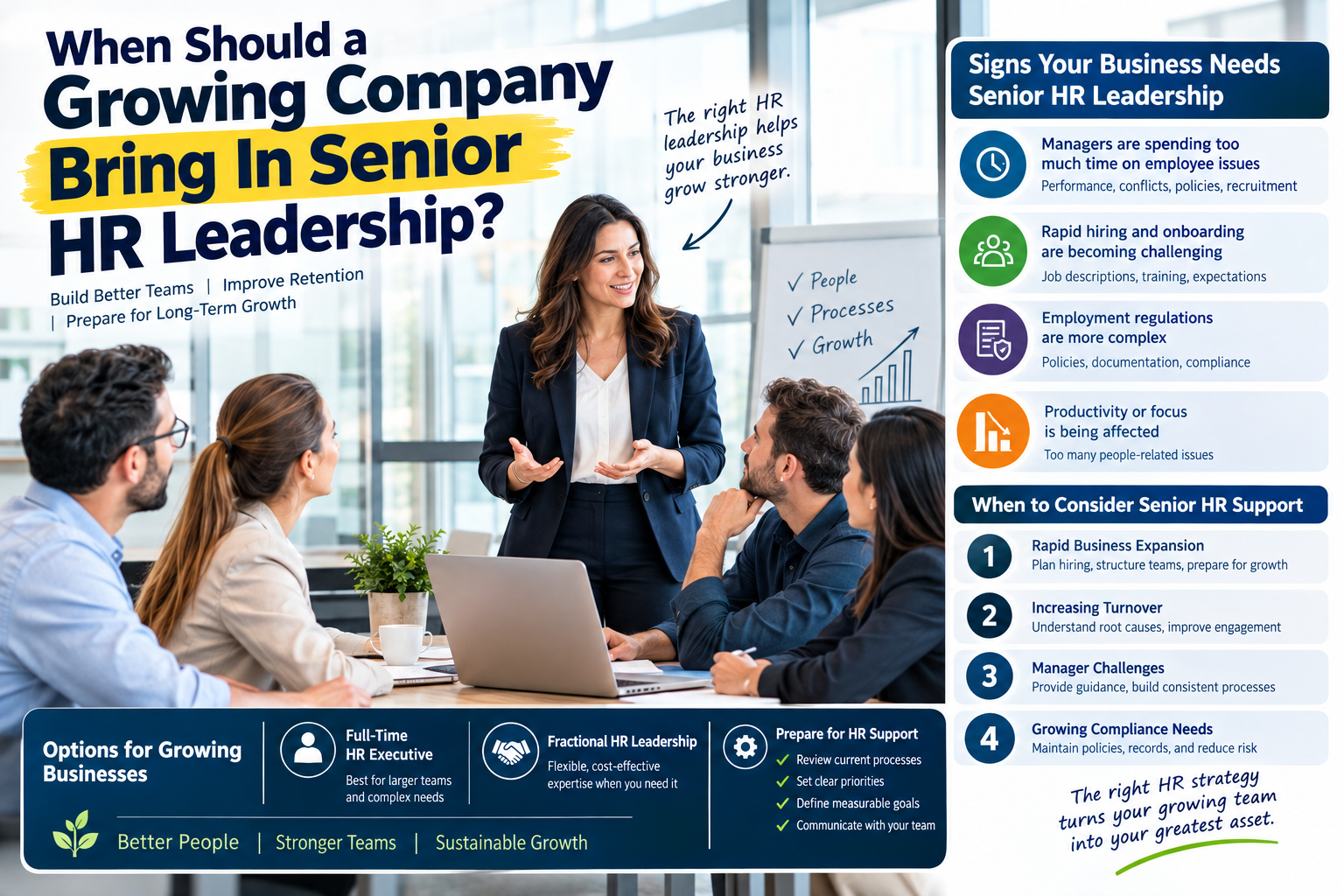
One of the first signs that a company needs experienced HR support is the increasing amount of time managers spend dealing with employee-related issues. Questions about performance, workplace conflicts, recruitment, and internal policies can quickly become overwhelming when there are no established procedures.
Rapid hiring is another important indicator. Bringing new employees into a growing organization requires more than publishing job advertisements and conducting interviews. Companies need effective onboarding, clear job descriptions, consistent performance expectations, and processes that help new hires become productive.
Businesses may also need senior HR guidance when employment regulations and employee relations become more complex. Developing appropriate policies and maintaining accurate documentation can help organizations manage responsibilities more consistently.
When these challenges begin affecting productivity or distracting founders from strategic decisions, it may be time to consider additional HR expertise.
Why Strategic HR Leadership Matters
Senior HR leadership helps connect workforce decisions with broader business objectives. Instead of focusing only on administrative tasks, an experienced HR leader can help organizations develop recruitment strategies, improve management practices, identify skill gaps, and create a more effective workplace culture.
For example, a company preparing to expand into another market may need to recruit new managers, establish reporting structures, and develop consistent onboarding procedures. Without a clear plan, rapid expansion can create confusion and increase pressure on existing employees.
A strategic HR approach helps business leaders anticipate these challenges before they become significant problems. It also encourages consistent decision-making across departments, making it easier for managers to communicate expectations and address performance concerns.
Companies exploring external expertise can consider Talento HR Partners when evaluating HR support options that align with their workforce needs and business objectives.
When Should a Company Hire a Senior HR Professional?
There is no universal employee count that determines when a business needs senior HR leadership. The appropriate timing depends on workforce size, growth rate, operational complexity, and the resources already available within the organization.
1. The Business Is Expanding Quickly
Rapid growth often creates new responsibilities that existing managers may not be prepared to handle. Hiring additional employees without a workforce plan can lead to unclear responsibilities, inconsistent recruitment, and unnecessary turnover.
A senior HR professional can help forecast staffing requirements, establish hiring priorities, and create processes that support expansion. This planning allows business owners to build a team that meets current demands while preparing for future needs.
2. Employee Turnover Is Increasing
Frequent resignations can disrupt operations and increase recruitment and training costs. They may also indicate problems with management, compensation, career development, or workplace culture.
An experienced HR leader can review employee feedback, identify recurring concerns, and recommend improvements. Better communication, clearer career pathways, and consistent management practices can help create an environment where employees are more likely to remain engaged.
3. Managers Are Struggling With Employee Relations
As teams become larger, workplace disagreements and performance concerns can become more difficult to resolve informally. Managers need clear procedures for providing feedback, documenting concerns, and addressing problems fairly.
Senior HR leadership can help establish these procedures and train managers to handle sensitive situations professionally. This support can improve consistency and reduce the risk of decisions being made without appropriate guidance.
4. Compliance Responsibilities Are Growing
Employment requirements can vary according to location, industry, and workforce arrangements. As a business expands, maintaining suitable policies, employment records, and consistent practices becomes increasingly important.
HR leadership can help identify potential gaps, develop internal procedures, and coordinate with qualified legal professionals when specialized employment-law advice is required.
Fractional HR Leadership for Growing Businesses
Not every growing company needs a full-time HR executive. Smaller organizations may require strategic guidance but lack the budget or ongoing workload to justify a permanent senior position.
In these situations, fractional HR leadership can provide a flexible alternative. This model gives businesses access to experienced HR expertise on a part-time or otherwise agreed basis, depending on the provider’s arrangement.
A fractional HR leader may help develop employee policies, improve hiring processes, establish performance management systems, support workforce planning, and advise business owners on organizational challenges.
This arrangement can be particularly useful when a company is growing quickly but has not yet reached the stage where a full-time HR executive is necessary. It can also help founders identify which HR responsibilities should remain internal and which may benefit from outside support.
The scope of the engagement should be clearly defined so that both the company and the HR professional understand the priorities, responsibilities, and expected outcomes.
How to Prepare for Senior HR Support
Before hiring a senior HR professional or engaging an external provider, business owners should identify their most pressing workforce challenges.
Start by reviewing existing processes. Consider whether recruitment is consistent, employee policies are documented, managers receive adequate guidance, and employees understand their responsibilities.
Next, establish clear priorities. A business experiencing rapid hiring may need workforce planning and onboarding improvements, while an organization struggling with turnover may benefit from a review of employee engagement and management practices.
It is also important to define measurable objectives. Depending on the company’s needs, these may include improving retention, reducing hiring delays, establishing consistent policies, or helping managers resolve employee concerns more effectively.
Finally, communicate the purpose of the new HR support to the wider team. Employees and managers should understand how the role will contribute to the organization and how it fits into existing responsibilities.
Building a Sustainable Business Through Better HR
Senior HR leadership becomes valuable when people-related challenges begin affecting business performance or limiting future growth. By establishing consistent processes, supporting managers, and planning workforce needs, companies can create a stronger foundation for expansion.
Some organizations will benefit from hiring a full-time HR executive, while others may find that fractional support offers the expertise they need with greater flexibility.
The most important step is recognizing when informal approaches are no longer enough. With the right HR strategy, growing businesses can manage employee challenges more effectively, strengthen workplace culture, and focus on achieving their long-term objectives.