
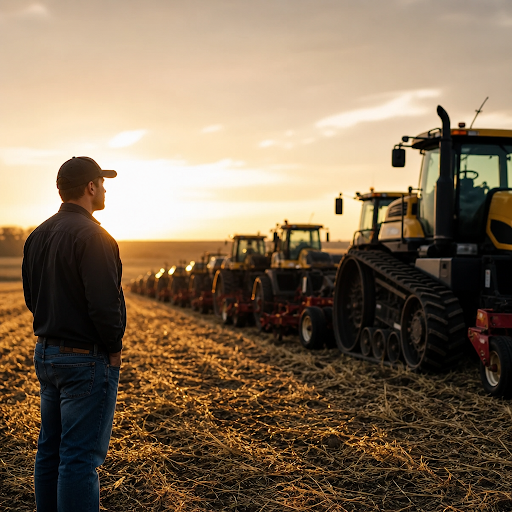
Agricultural operations today face mounting pressure to balance productivity with cost management. Equipment purchasing decisions represent some of the most significant capital investments farmers and ranchers make, often determining operational efficiency for years to come. The landscape of farm equipment acquisition has evolved considerably, with producers weighing new versus pre-owned machinery, evaluating total cost of ownership, and considering how each piece fits into their broader operational strategy.
Modern farming demands versatile equipment that can handle multiple tasks across different seasons. Understanding when to invest in specific implements, how to evaluate their condition and performance potential, and where to source reliable machinery forms the foundation of sound agricultural business planning. Equipment decisions ripple through every aspect of farm economics, from maintenance budgets to fuel consumption, from labor requirements to land management capabilities.
The Critical Role of Rotary Cutters in Land Management
Rotary cutters, commonly known by the brand name that pioneered them, serve as indispensable tools for maintaining pastures, clearing brush, and managing vegetation across agricultural properties. These implements handle tasks that range from routine pasture grooming to heavy-duty brush clearing in overgrown areas. Their robust construction and powerful cutting capability make them essential for operations managing significant acreage, particularly in regions with fast-growing vegetation or mixed-use land.
For producers exploring equipment options, the secondary market offers compelling opportunities. When evaluating used bush hogs for sale, buyers can access professional-grade implements at substantially reduced investment levels compared to new models, allowing them to allocate capital more strategically across their operation. The key lies in understanding what to look for during inspection and how to assess whether a pre-owned unit will deliver the performance and reliability required for demanding agricultural work.
Infrastructure Planning and Equipment Storage Considerations
Equipment longevity depends significantly on proper storage and maintenance practices. Farmers increasingly recognize that strategic facility planning directly impacts machinery lifespan and performance. Comprehensive approaches to multi-purpose farm buildings can integrate equipment storage with livestock housing and office space, creating efficient operational hubs that protect valuable machinery investments while centralizing farm management activities.
Protected storage extends equipment life by shielding components from weather exposure that accelerates corrosion, degrades hydraulic seals, and deteriorates electrical systems. Well-designed storage facilities also improve operational efficiency by providing organized access to implements, reducing time spent retrieving and preparing equipment for field work. The upfront investment in proper infrastructure pays dividends through reduced replacement frequency and lower maintenance costs throughout the equipment lifecycle.
Evaluating Pre-Owned Equipment Quality
Purchasing used agricultural equipment requires careful evaluation beyond surface appearances. Critical inspection points include blade condition and wear patterns, gearbox integrity and oil quality, driveline components for excessive play or damage, deck structural soundness, and chain condition in chain-driven models. These assessment areas reveal how the previous owner maintained the equipment and predict future reliability.
Hour meters provide valuable operational history, though they should be considered alongside visible wear patterns rather than as absolute determinants. An implement with high hours but consistent maintenance often proves more reliable than low-hour equipment that experienced neglect or improper use. Documentation of service history, when available, offers insight into the care the equipment received and helps buyers make informed decisions about remaining service life.
Alternative Access Models for Agricultural Equipment
Innovative approaches to equipment access continue emerging in agricultural communities. Some regions have developed lending library programs that allow producers to access specialized equipment without full ownership commitments. These shared-use models work particularly well for implements needed infrequently or for trial periods before making purchase decisions.
Cooperative equipment ownership and rental arrangements also provide flexibility for smaller operations or those testing new land management approaches. By reducing individual capital requirements while maintaining access to necessary implements, these models help farmers allocate resources toward land improvements, crop inputs, or other productivity-enhancing investments. The appropriate access model depends on usage frequency, storage capacity, maintenance capabilities, and overall operational scale.
Matching Equipment Specifications to Operational Needs
Selecting appropriate implement size and power requirements prevents both underperformance and unnecessary expense. Cutting width should match tractor horsepower and typical job sizes, with wider decks requiring proportionally more power to maintain blade speed through heavy vegetation. Operations managing diverse terrain benefit from adjustable skid shoes and flexible hitch designs that accommodate varying ground conditions.
Blade configuration affects cutting performance across different vegetation types. Standard swing-back blades suit general-purpose mowing and light brush, while fixed blades excel in heavy brush where maximum cutting force matters more than impact protection. Understanding these distinctions ensures equipment purchases align with actual field conditions rather than general specifications.
Financial Planning for Equipment Acquisition
Equipment purchases represent significant capital allocation decisions requiring thorough financial analysis. Total cost of ownership extends beyond purchase price to include maintenance expenses, fuel consumption, insurance, storage, and eventual resale or disposal. Pre-owned equipment typically offers lower initial investment but may require higher maintenance spending, particularly for older units or those operated in demanding conditions.
Financing options vary considerably, from traditional equipment loans to lease arrangements and dealer financing programs. Each approach carries distinct tax implications and cash flow impacts that should align with broader farm financial planning. Working with agricultural lenders familiar with equipment values and farming economics ensures financing structures support rather than constrain operational flexibility.
HR AgriPower’s Role in Agricultural Equipment Solutions
HR AgriPower has established itself as a trusted source for quality agricultural equipment across multiple categories. Their comprehensive inventory includes a diverse selection of implements suitable for various farming operations, from compact utility tractors to large-scale production equipment. The company’s focus on inspection, reconditioning, and accurate equipment representation helps buyers make confident purchasing decisions.
Their team brings extensive agricultural knowledge to equipment consultations, helping match implement specifications to operational requirements rather than simply processing transactions. This approach particularly benefits producers expanding operations or transitioning to different agricultural enterprises who need guidance navigating equipment options. By maintaining rigorous quality standards and transparent communication, they facilitate successful equipment acquisitions that support long-term farm productivity.
Building Long-Term Equipment Strategies
Successful agricultural operations develop comprehensive equipment strategies that anticipate future needs while addressing current requirements. This forward-looking approach considers factors like planned acreage changes, crop or livestock diversification, labor availability, and evolving land management practices. Strategic equipment planning prevents reactive purchases made under time pressure that may not align with long-term operational goals.
Regular equipment audits help identify underutilized implements, maintenance needs, and replacement priorities. This systematic review process ensures capital flows toward equipment that genuinely enhances productivity rather than accumulating underperforming assets. By treating equipment as an integrated system rather than isolated purchases, farmers maximize return on their machinery investments while maintaining operational flexibility to adapt as circumstances change.