
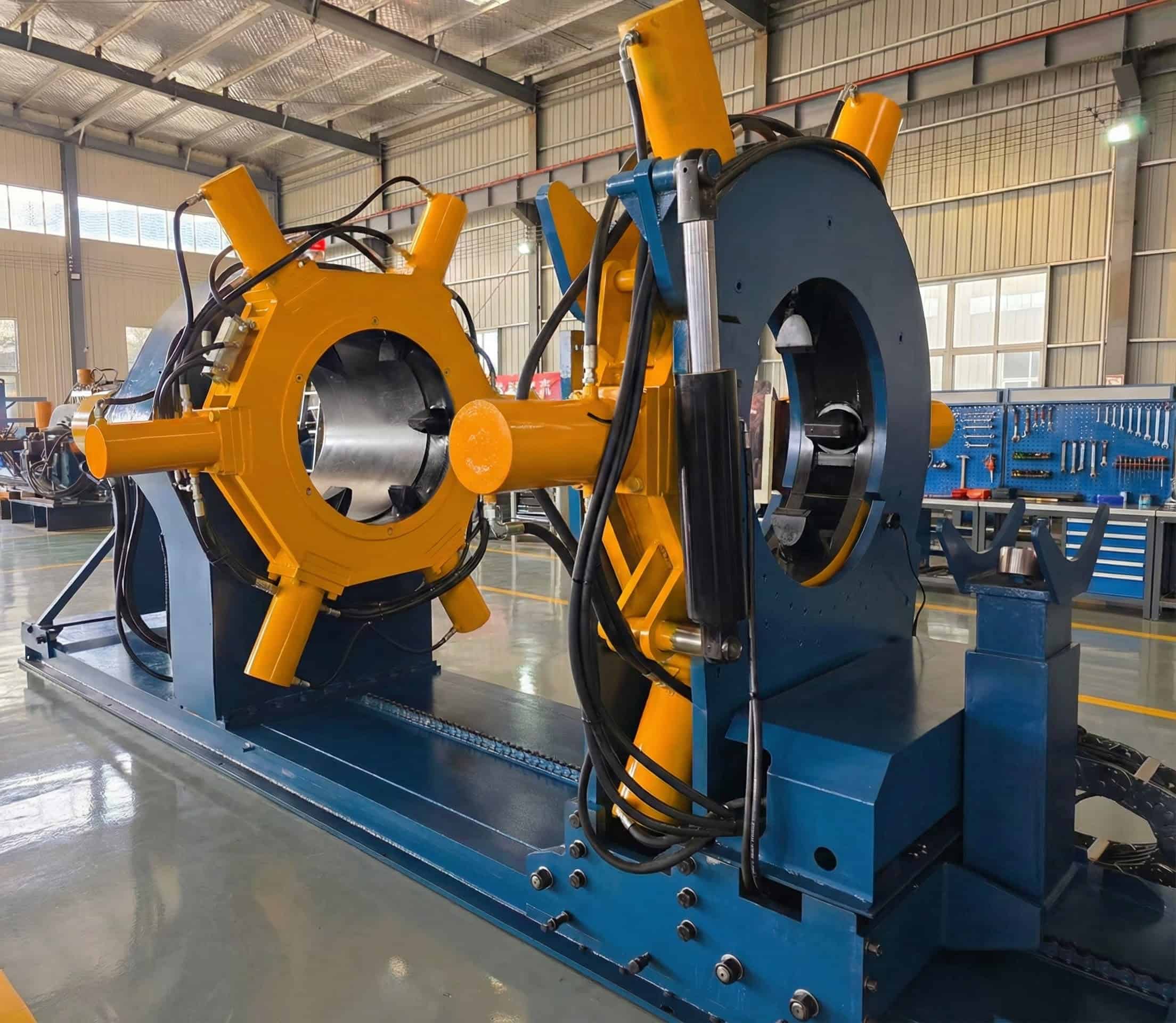
Oil and gas companies operate in an environment where equipment reliability, connection quality, and turnaround time can directly influence project performance. A single damaged thread, poorly made connection, or delayed tool assembly can create additional inspection work, interrupt workshop schedules, and increase costly nonproductive time. For this reason, many drilling contractors, completion companies, repair facilities, and tubular service providers are paying closer attention to the equipment used to assemble and disassemble threaded components.
One of the most important machines in this process is the bucking unit. Although it may appear to be a specialized workshop asset, its effect can reach far beyond the maintenance department. The right equipment can support more repeatable connection makeup, faster tool preparation, safer work practices, clearer quality records, and better use of skilled labor. In a competitive market, these improvements can become a meaningful business advantage.
For companies comparing equipment options, selecting the right bucking unit should begin with a clear understanding of the connections being handled, the required torque range, the available workspace, and the level of automation or data recording needed.
What Is a Bucking Unit?
A bucking unit is a powered machine used to make up or break out threaded connections on oilfield tubulars and tools. Depending on its design and capacity, it may be used with drillpipe components, casing, tubing, drill collars, bottom-hole assemblies, completion equipment, downhole motors, valves, couplings, and other threaded products.
In a typical horizontal configuration, one section of the component is held by a stationary backup assembly while another section is gripped and rotated by a powered tong or headstock. A supporting frame keeps the equipment aligned and provides the structure needed to transmit high torque in a controlled manner.
Manufacturers offer different machine layouts, gripping systems, bed lengths, torque capacities, and automation packages because oilfield components vary considerably in diameter, length, material, and connection design. McCoy Global, for example, describes three main elements in its pipe bucking machine: a powered rotating tong, a nonrotating backup assembly, and a supporting frame containing the drive mechanisms. Weatherford also offers systems for tubulars, couplings, drillpipe, bottom-hole assemblies, drill collars, motors, and other drilling tools.
This combination of controlled gripping, alignment, and powered rotation is what separates a purpose-built bucking machine from improvised methods. Instead of relying on manual force or a tool that was not designed for repeatable workshop assembly, operators can apply torque under defined conditions and monitor the connection as it is made or broken.
How the Equipment Works
The process normally begins by identifying the component, confirming the connection specification, inspecting the threads, and selecting the correct dies or gripping inserts. The tubular or tool is then placed on the machine’s supports and positioned between the rotating and backup assemblies.
The backup grips one side of the connection and prevents it from turning. The powered assembly grips the other side and applies rotational force. During makeup, the system rotates the connection until the specified torque, number of turns, shoulder condition, or programmed acceptance criteria are reached.
During breakout, the machine applies force in the opposite direction to release the connection for inspection, repair, redressing, or disassembly. The controlled setup allows technicians to concentrate on the condition and performance of the connection instead of attempting to restrain the component manually.
Modern control packages can monitor torque, turns, and rotational speed in real time. They may also produce torque-turn graphs, store previous results, generate reports, and help the operator determine whether a connection meets its specified makeup criteria. Some systems allow users to establish makeup parameters and evaluate the quality of each completed connection.
This turns the machine into more than a source of hydraulic power. It becomes part of the company’s quality-control and traceability process.
Why Connection Quality Has Business Value
Threaded connections must perform under demanding operating conditions. They may experience high axial loads, torsion, pressure, vibration, temperature changes, corrosive fluids, and repeated service cycles. A connection that is not assembled according to the correct procedure may not deliver the intended performance.
A controlled makeup process helps a business reduce variation. The objective is not simply to tighten a connection as much as possible. It is to make the connection according to the appropriate specification while protecting its threads, shoulders, seals, and component body.
That consistency matters commercially. When a service company can demonstrate that its connection process is controlled, monitored, and documented, it can strengthen customer confidence. It may also make internal inspections, job reviews, and quality investigations easier because the organization has recorded evidence rather than relying only on memory or handwritten notes.
Reliable connection records can be especially valuable when several technicians, shifts, workshops, or customer specifications are involved. A standardized process gives the business a common method for setting up jobs, reviewing results, and responding when a connection is rejected.
Faster Preparation and Less Critical-Path Work
Time saved in a workshop can create value at the rig. Components that are inspected, assembled, torqued, and documented before mobilization can arrive ready for the next stage of work. In suitable applications, offline makeup can reduce the number of connections that must be completed during critical operations.
A bucking unit can also improve workshop flow. Repeatable machine settings, appropriate support systems, and organized tooling allow technicians to move from one connection to the next with fewer delays. This is especially useful for businesses that handle recurring tool strings, repair batches, or tubular preparation programs.
The greatest productivity benefit does not always come from maximum rotational speed. It often comes from reducing interruptions. Correct dies, stable supports, accessible controls, stored connection programs, and reliable maintenance can help prevent the small delays that accumulate across a full shift.
For managers, the key question is therefore not only, “How fast does the machine turn?” A more useful question is, “How much completed and accepted work can the full process deliver per hour?”
That broader measurement includes loading, positioning, gripping, makeup, inspection, reporting, unloading, and changeover time. A machine with a high maximum speed may still produce disappointing results when loading is difficult, changeovers are slow, or completed connections regularly require rework.
Supporting a Safer, More Controlled Workflow
High-torque connection work carries obvious hazards when it is performed with uncontrolled movement, unsuitable tools, poor support, or excessive manual handling. A properly selected bucking system creates a defined work area where the component is supported and rotational force is applied by the machine.
This does not remove the need for risk assessments, guarding, exclusion zones, lockout procedures, operator training, and preventive maintenance. It does, however, give the company a stronger foundation for a standardized operating procedure.
Controls can be positioned away from the immediate connection area, and work can be organized so that personnel do not need to improvise how heavy components will be held or restrained. A structured loading and unloading procedure can also reduce unnecessary movement around suspended or unsupported equipment.
Machine layout is especially important. Loading height, access around the bed, support-stand location, hose routing, emergency-stop placement, lighting, and material-handling equipment all affect the real safety of the installation.
A high-specification machine placed in a poorly planned workspace may still create avoidable risk. The purchasing decision should therefore consider the complete work cell, not just the torque unit.
Protecting Valuable Tools and Tubulars
Oilfield components can represent a significant investment. Damage caused during gripping, misalignment, makeup, or breakout can lead to repair expenses, rejected components, delayed jobs, and disagreements over responsibility. The design of the gripping system is therefore a major consideration.
The dies or jaws must grip securely enough to transmit torque without allowing the component to slip. At the same time, the contact area and gripping force should be appropriate for the material and geometry being handled.
Premium connections, specialty alloys, thin-wall components, and finished surfaces may require particular care. Buyers should verify whether standard dies are suitable or whether customized inserts, nonmarking options, or alternative gripping arrangements will be needed.
Alignment is equally important. When long or heavy components are not adequately supported, their weight can place unwanted side loads on the connection or machine. Adjustable rollers, support stands, extension beams, vises, and push-pull systems can improve positioning while reducing unnecessary handling.
A good purchasing process should identify the most sensitive and valuable components the company expects to handle. It is generally easier to specify the correct gripping and support package before installation than to redesign the workflow after damage has occurred.
Digital Monitoring and Traceability
Data is becoming an increasingly important part of oilfield equipment management. A torque value written on a job card provides limited information. A digital record can show how torque developed throughout the makeup cycle, how many turns were applied, the rotational speed, the selected connection program, and whether the result was accepted or rejected.
Torque-turn monitoring is particularly valuable when a business handles multiple connection types or follows customer-specific procedures. Stored programs can reduce setup variation, while electronic reports can be attached to job files or supplied with completed assemblies.
Available monitoring systems can provide real-time torque, turns, and rotational-speed information, along with customizable reports, connection libraries, graph overlays, previous-job reviews, and automatic acceptance or rejection functions.
The data can also support continuous improvement. Managers can review rejected makeups, compare results across operators or shifts, identify recurring connection problems, and investigate whether changes in dies, lubrication, component condition, or machine setup are affecting performance.
Over time, these records can help the business move from reactive troubleshooting toward evidence-based process control. Instead of treating every rejected connection as an isolated incident, managers can look for patterns and address underlying causes.
Digital capability should not be evaluated only by the appearance of the control screen. Buyers should ask how the system stores records, exports reports, controls user access, backs up data, manages connection libraries, and integrates with existing quality systems.
They should also confirm what happens when a sensor, computer, encoder, or network connection fails. A dependable recovery process is just as important as an advanced user interface.
Different Machines for Different Operations
There is no single configuration that is ideal for every company. Some bucking units are continuously rotating, while others use stroke-based or ratchet-style movement. Some are designed primarily for fixed workshop use, while others are compact or mobile enough for rig-site or offshore applications.
Machines also differ in chucking capacity, torque range, bed length, loading method, rotation speed, power requirements, and control sophistication. For example, commercially available systems can range from smaller make-and-break machines to units handling much larger diameters and torque requirements.
A repair shop handling short downhole tools may prioritize quick changeover and flexible head spacing. A tubular preparation facility may need a longer bed, multiple support points, efficient material handling, and comprehensive reporting capability.
A rig contractor may place greater value on portability, compact dimensions, weather protection, and rapid installation. A manufacturing or threading facility may prioritize repeatability, continuous use, inspection integration, and production reporting.
This is why buyers should resist choosing a machine only because it has the highest advertised torque. Oversizing can increase cost and footprint without improving the real process, while undersizing can limit future work or force the machine to operate near its maximum capacity too frequently.
The best solution is the one that fits the company’s actual connection range, production volume, available infrastructure, and expected growth.
Key Factors to Consider Before Buying
The first consideration is the required torque range. The machine must cover the minimum and maximum torque values needed for the company’s current work, with an appropriate operating margin.
Buyers should verify both makeup and breakout capability because releasing a used, tightly assembled, or difficult connection may require different performance from assembling a clean new one.
The second consideration is component size. Minimum and maximum outside diameter, connection geometry, tool length, and weight all influence chuck selection, die design, bed length, and support requirements.
A general statement that a machine can handle “casing and tubing” is not enough. The supplier should review a detailed list of the actual components that will be processed.
The third consideration is connection variety. Standard connections, premium connections, proprietary tool joints, shoulders, seals, and specialty materials may require different procedures. The control system should accommodate the necessary makeup criteria, and the gripping system should be suitable for the component surface.
The fourth consideration is workflow. Managers should map how material will enter the work area, reach the machine, be supported, pass through inspection, and leave for storage or dispatch.
Crane access, forklifts, pipe racks, floor loading, door dimensions, and operator movement can determine whether the installation is efficient. These details should be studied before the final machine layout is approved.
The fifth consideration is data and automation. Some businesses need basic hydraulic control and a calibrated torque display. Others need programmable sequences, automatic acceptance criteria, torque-turn graphs, job reports, customer-specific templates, and integration with a quality-management system.
Paying for unnecessary complexity can waste capital, but failing to specify essential traceability can also be costly. Buyers should define which information customers require and how completed job records will be stored.
Finally, companies should assess supplier support. Commissioning, operator training, calibration, preventive maintenance, spare parts, software updates, remote diagnostics, and technical response all affect lifetime value.
The cheapest purchase price may become expensive if a minor component failure leaves the machine unavailable for several weeks.
Looking Beyond the Purchase Price
A bucking unit should be evaluated as a productive asset rather than a one-time equipment expense. The business case can include increased workshop throughput, reduced connection rework, fewer damaged components, less outsourced assembly, improved documentation, better labor utilization, and reduced critical-path activity.
At the same time, the cost model should include installation, foundations or floor preparation, electrical and hydraulic requirements, lifting equipment, dies and inserts, calibration, training, scheduled maintenance, software support, spare parts, and eventual upgrades.
A practical return-on-investment review can compare the existing process with the proposed process. Management should document how many connections are handled each month, the average labor hours per job, outsourcing costs, rework rates, damaged-component costs, waiting time, and revenue lost when work cannot be accepted.
Even approximate baseline data will produce a more useful decision than relying on a general claim that automation saves time.
Companies should also consider strategic value. A new machine may allow the workshop to quote for larger tools, premium connections, longer assemblies, or customers that require electronic reports. In that situation, the investment can create new revenue as well as reduce existing costs.
Management can organize the financial evaluation around four areas: cost reduction, capacity improvement, risk reduction, and new business potential. This provides a more balanced picture than considering equipment depreciation alone.
Successful Implementation Requires More Than Installation
The equipment supplier and buyer should agree on an acceptance plan before delivery. That plan can include the component range, target torque values, cycle expectations, report format, control functions, safety devices, and training requirements.
Testing with representative components helps identify problems before the machine enters full production. It can also confirm whether the proposed dies, supports, software settings, and material-handling arrangements are suitable.
Standard operating procedures should cover inspection, die selection, loading, alignment, clamping, makeup, breakout, report review, emergency response, and shutdown.
Maintenance procedures should identify inspection intervals for hoses, cylinders, jaws, dies, sensors, guards, fasteners, supports, lubrication points, and control hardware.
Operator competence is equally important. The machine may apply torque automatically, but personnel still need to recognize damaged threads, incorrect dies, poor alignment, abnormal torque behavior, hydraulic leaks, and unsafe conditions.
Supervisors should also understand the reports well enough to investigate rejected connections rather than simply repeating the makeup cycle. A rejected result can indicate a setup error, component problem, lubrication issue, sensor fault, or connection defect. Repeating the process without investigation may create further damage.
Training should therefore cover both machine operation and connection-quality principles.
Maintenance and Calibration Protect the Investment
Preventive maintenance should be treated as part of production planning rather than as a task performed only after a breakdown. Hydraulic leaks, worn dies, loose supports, damaged hoses, inaccurate sensors, and contaminated fluid can affect both productivity and connection results.
Daily or shift inspections can identify visible damage and unusual machine behavior. More detailed maintenance can be scheduled according to operating hours, cycle counts, manufacturer recommendations, and the severity of the working environment.
Torque-measurement equipment should also be checked and calibrated according to the company’s quality requirements. A sophisticated monitoring system offers little value when its sensors are inaccurate or its calibration status cannot be verified.
Businesses should keep a suitable stock of high-use consumables and critical replacement parts. The correct inventory will vary, but it may include seals, hoses, filters, dies, inserts, sensors, cables, switches, and hydraulic components.
Supplier response time should be considered when determining which parts must be stored locally. A component that is inexpensive but difficult to obtain can create more downtime than a costly part that is readily available.
Building a Stronger Customer Proposition
Investing in better connection equipment can also strengthen a company’s sales position. Customers are not only purchasing the physical makeup or breakout of a tool. They are purchasing reliability, documentation, availability, technical competence, and confidence that the work was performed correctly.
A workshop that can explain its process, demonstrate operator training, provide electronic connection reports, and show current calibration records may be more attractive than a competitor offering only a lower price.
This is particularly relevant when customers are comparing suppliers for recurring work. A well-managed connection process can become part of the organization’s wider quality proposition.
Sales teams should understand the machine’s capabilities and limitations. They should know the available diameter and torque range, supported connection types, reporting options, expected capacity, and technical approval process.
Clear communication prevents the business from accepting jobs that the machine or workshop cannot safely complete. It also helps salespeople identify opportunities that match the company’s actual strengths.
The Future of Bucking Technology
The next stage of development is likely to focus on better data use, easier automation, remote support, and integration with wider workshop systems. Connection libraries can help standardize setup, while automated reports can reduce administrative work.
Sensor data may also support condition-based maintenance by showing changes in hydraulic performance, cycle time, torque behavior, or gripping consistency. The direction is already visible in systems that provide real-time monitoring, connection libraries, automatic recording, customizable reports, and historical-result reviews.
However, technology should serve the process rather than complicate it. A successful system combines reliable mechanical design with controls that operators can understand and maintain.
The most valuable innovation is not always the feature with the most impressive demonstration. It is the feature that consistently reduces variation, prevents mistakes, protects equipment, or makes useful information available at the right time.
Conclusion
A bucking unit can influence much more than the speed of assembling and disassembling threaded components. When correctly specified and integrated into the workshop, it can support connection consistency, safer handling, digital traceability, asset protection, customer confidence, and stronger operational planning.
The best purchasing decision begins with the work, not the machine. Companies should define their connection range, torque requirements, component dimensions, reporting needs, workspace limitations, service expectations, and future growth plans.
They should then compare complete lifecycle value rather than focusing only on maximum torque or initial price.
Oilfield businesses that take this structured approach are more likely to select equipment that remains useful as customer requirements evolve. To review additional equipment options, customization possibilities, and technical support, learn more before preparing the final machine specification.