
Small Apartments and Better Back Care
Studio apartments and compact urban flats have multiplied steadily across Indian cities over the past decade, driven by rising property prices and a growing population of young professionals living alone or in pairs. These spaces solve a real housing problem, but they introduce a specific physical one: when the square footage available for sleeping is also the square footage available for living, the furniture and surfaces chosen for that dual purpose carry genuine health implications.
Back discomfort is one of the most commonly reported physical complaints among people living and working in compact apartments. The causes accumulate: working from a sofa or bed during the day, sleeping on a mattress that was chosen for its folding convenience rather than its support properties, and spending hours on surfaces that were never designed for extended use. Standard folding couch setups, often purchased primarily for their daytime profile, frequently use thin, unsupported sleeping surfaces that offer little spinal alignment over a full night.
Designing a tight layout that genuinely prioritizes physical wellness requires thinking about day and night use simultaneously rather than treating them as separate problems.
Making Multi-Functional Furniture Work for Your Living Room
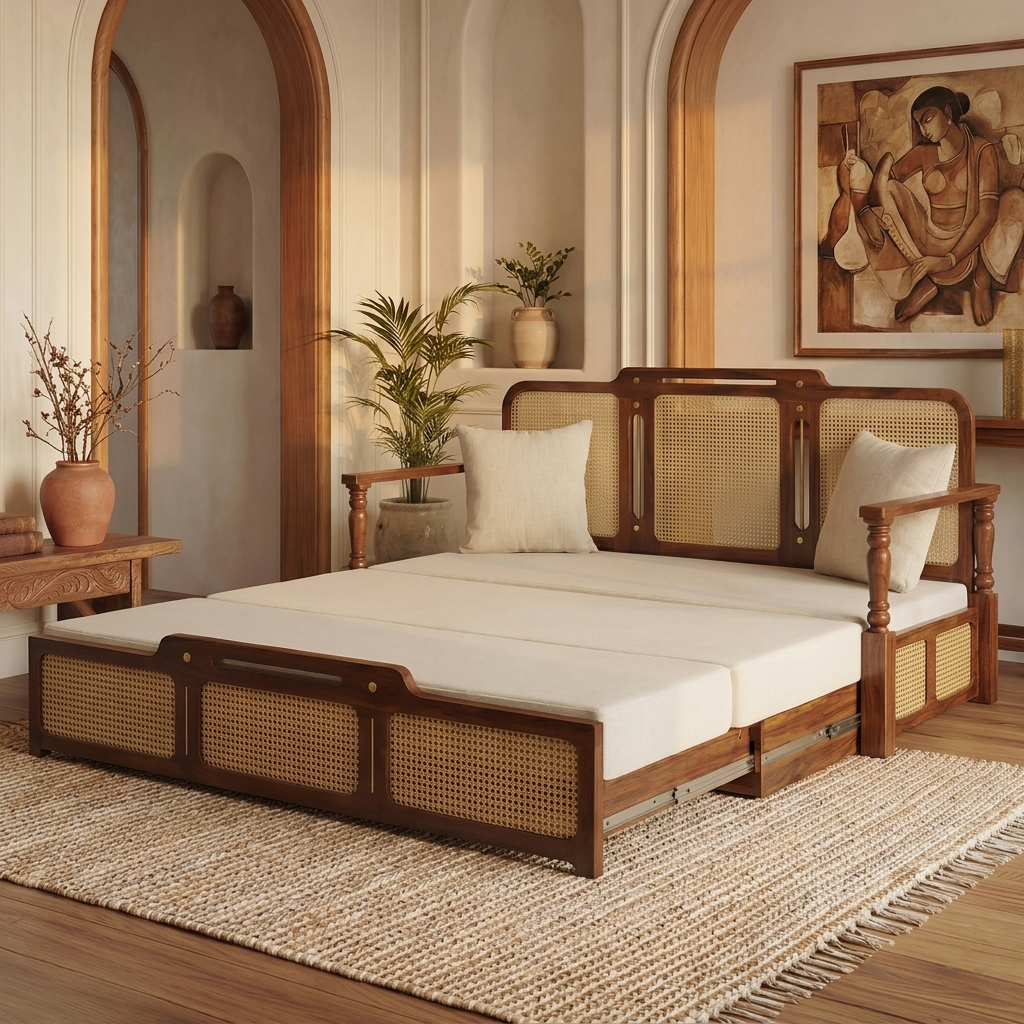
The sofa cum bed has evolved considerably from the creaking, sagging convertibles of earlier decades. Contemporary versions from quality manufacturers use mechanisms that fold and extend cleanly, frames built from materials that resist the repeated stress of daily conversion, and sleeping surfaces designed to function as actual mattresses rather than cushion arrangements that approximate one.
Used well, a convertible sofa bed resolves the studio apartment’s core spatial contradiction: the same floor area serves as comfortable seating during the day and supportive sleeping space at night, without either function requiring a dedicated zone of its own. This matters in rooms where every square meter has multiple jobs.
The mechanism quality is the deciding factor in whether this arrangement works over time. Frames with sturdy metal or hardwood joints resist the lateral flexing that causes sagging, which is the primary structural problem in heavily used convertibles. A frame that maintains its geometry after hundreds of conversions keeps the sleeping surface level and supported; one that gradually flexes does the opposite, creating the pressure points and misalignment that translate directly to morning back discomfort.
Simple Mattress Features for Maximum Back Relief
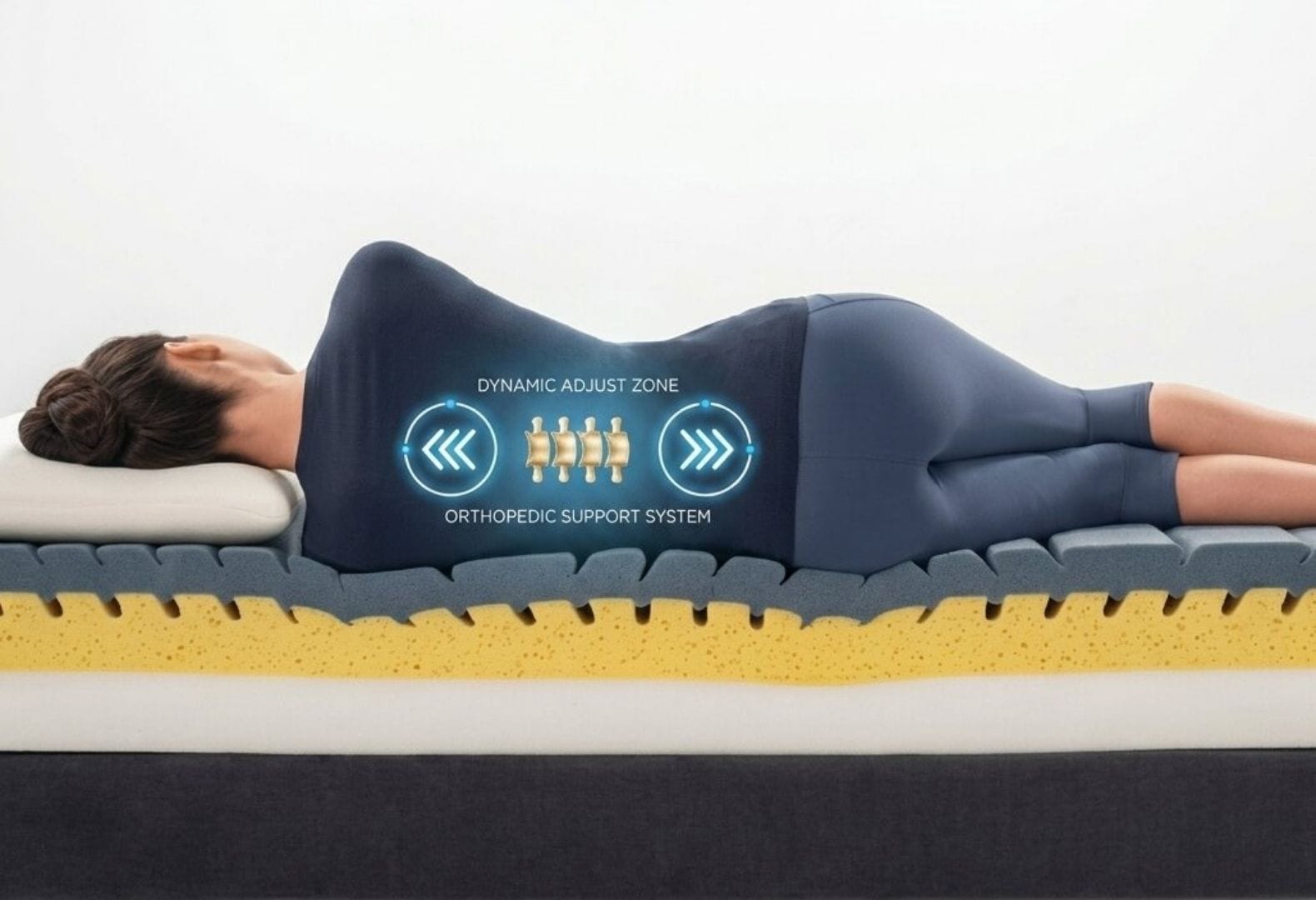
The best mattress for back pain in a convertible setup shares the core characteristics that matter in any sleeping context: medium-firm support that holds the spine in neutral alignment rather than allowing it to sag into a softer surface or strain against an overly rigid one, consistent support across the full mattress surface rather than concentrated in the center, and sufficient edge support to prevent the rolling sensation that disrupts sleep and strains the lower back.
Edge support deserves particular attention in convertible applications. A mattress that is soft at the perimeter compresses under the weight of anyone sleeping near the sides, creating an inclined surface that the body unconsciously compensates for throughout the night. In a wider convertible bed where sleeping positions shift through the night, consistent support from center to edge prevents this problem.
Temperature regulation matters more in compact urban apartments than in larger, better-ventilated spaces. A mattress that retains body heat creates discomfort during warm months, and Indian urban summers provide plenty of those, disrupting sleep in ways that accumulate across a working week. Open-cell foam constructions and natural fiber cover materials improve airflow, reducing heat retention without affecting support properties.
Comparing Materials for Healthy Lumbar Alignment
Multi-layer foam construction, when the layers are correctly specified, does specific and different work at each depth. A top comfort layer in softer, contouring foam distributes pressure across the hips and shoulders, reducing localized compression at the body’s heaviest contact points. A firmer transition layer beneath it prevents excessive sinkage, keeping the spine from dropping below the level of the surrounding surface. A dense base layer provides the structural foundation that holds both layers in position and prevents the gradual compression that degrades mattress performance over time.
Pocketed coil systems offer a different approach to the same problem. Individual coils, each housed separately rather than connected in a continuous unit, respond independently to pressure, supporting the lower back and hips with greater resistance where the body is heaviest while allowing lighter areas like the knees and shoulders to rest with less pressure. In a two-person sleeping arrangement on a convertible, this means each person’s weight is supported independently rather than creating a shared depression in the center.
The practical choice between foam and coil construction in a convertible application also involves thickness. Pocketed coil mattresses tend to be deeper than foam alternatives of equivalent support, which can affect the ease of folding and the daytime profile of a convertible sofa.
Upgrading Sofa Beds and Keeping Your Room Organized
Matching orthopaedic mattress materials with a quality convertible frame is the core of a back-friendly studio setup, but the surrounding organization of the room affects daily comfort in ways that are easy to underestimate. A room where bedding has no clear storage home at the start of each day becomes a room where pillows sit on chairs, blankets drape over surfaces, and the visual result communicates unresolved business regardless of how good the underlying furniture is.
Mattress thickness directly affects the daily usability of a convertible sofa. A sleeping surface thicker than twelve to fifteen centimeters typically creates a daytime profile that sits awkwardly, either too high for comfortable sofa use or too bulky for the frame to fold cleanly. The ideal thickness range for most convertible applications provides sufficient support for back relief without compromising the mechanism’s folding geometry.
Dedicated storage for pillows and bedding, an ottoman with a lift-top lid, a low storage bench at the foot of the convertible, or a compact wardrobe shelf reserved specifically for sleep items, keeps these bulky pieces contained and the room looking composed during waking hours.
Creating a Restorative Urban Sanctuary
The studio apartment back pain problem is solvable. It requires treating the sleeping setup as a genuine health consideration rather than an afterthought to the spatial planning, choosing a convertible frame built for long-term structural stability, pairing it with a mattress that addresses spinal alignment rather than simply filling the sleeping surface, and organizing the surrounding room so that both its day and night functions are supported by the available storage.
Long-term physical health in a compact apartment is a cumulative outcome. Consistent spinal support across hundreds of nights adds up in the same direction that consistent poor support does, the difference is simply which direction that is.
Limited square footage does not have to mean compromised sleep quality. With the right choices, it can mean a space that serves both daily comfort and nightly recovery with equal effectiveness.