
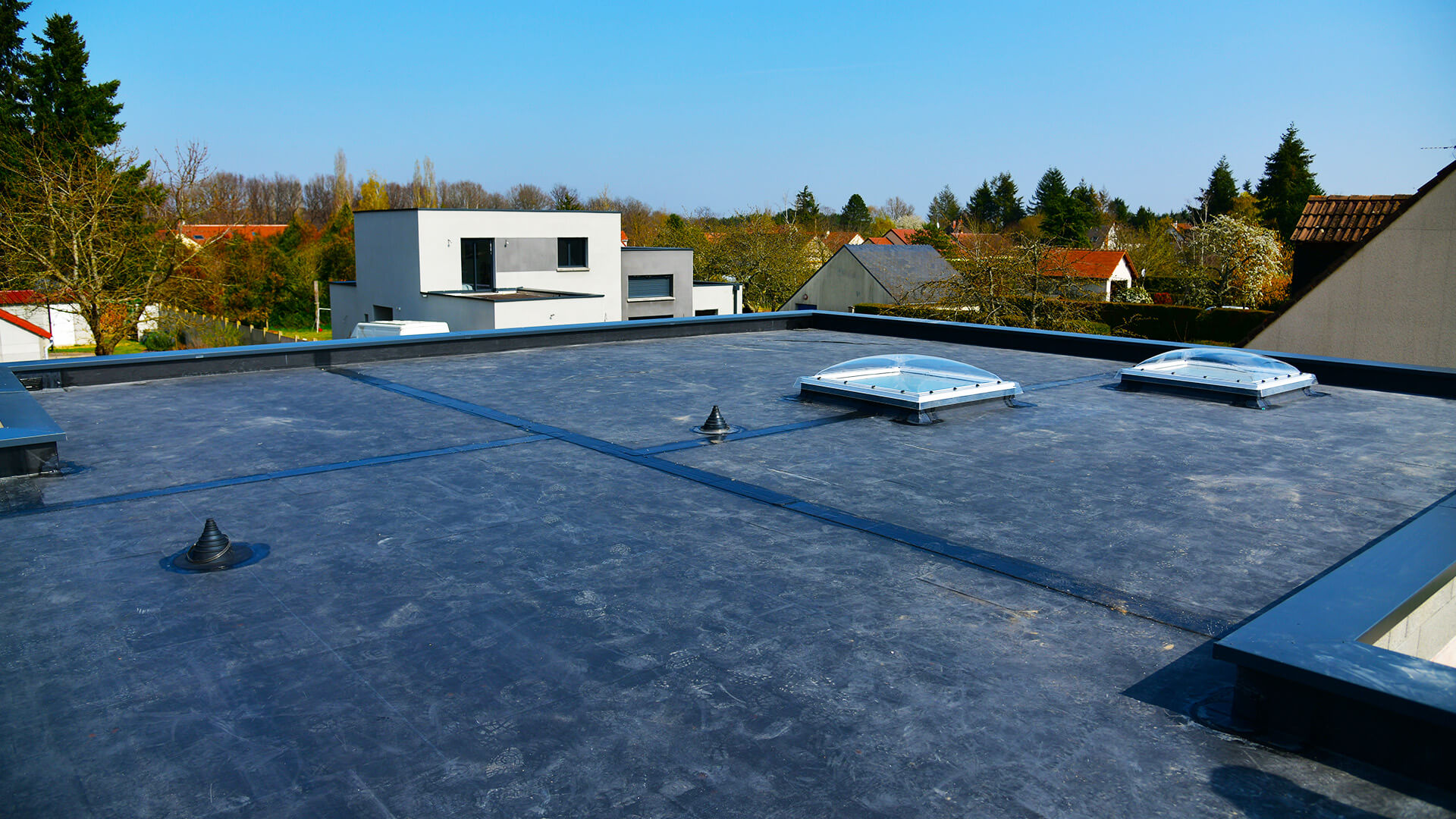
If you manage a commercial property with a flat or low-slope roof in the Mid-Atlantic, you already know the climate doesn’t go easy on buildings.
Summer brings intense sun and humidity. Winter delivers freezing temperatures, snow accumulation, and relentless freeze-thaw cycles. Add in surprise storms, wind-driven rain, and urban heat island effects in areas like Washington, DC or Baltimore, and your roofing system starts to feel the pressure.
This region’s volatility teaches a valuable lesson: roofing material selection isn’t just a spec—it’s a survival strategy.
For facilities operating on tight margins and long-term capital plans, choosing the right membrane can significantly affect durability, energy efficiency, and lifetime cost.
Let’s take a closer look at how Mid-Atlantic conditions push roofing systems to their limits—and where some options stand out more than others.
What Makes the Mid-Atlantic So Challenging for Flat Roofs?
While some regions experience seasonal consistency, the Mid-Atlantic is known for its swings. A typical year might include:
- 90°F+ summer days with high UV exposure
- Intense humidity and afternoon thunderstorms
- Fall cold fronts that swing temperatures by 30 degrees in 24 hours
- Repeated freeze-thaw cycles from December through March
- Spring pollen buildup and sudden roof-drain overloads
Each of these conditions impacts a different part of your roofing system. UV radiation degrades membrane surfaces. Temperature swings stress seams and adhesives. Standing water from poor drainage or clogged scuppers causes membrane fatigue.
If your roof isn’t designed to flex, reflect, and shed water—it won’t last as long as it should.
Where Material Choice Makes the Biggest Difference
Not all flat roof systems are created equal, and not every material performs well in variable climates. Choosing a system based on installation speed or initial cost alone can create bigger problems later—especially in a region where the weather is a year-round challenge.
Here are a few system-level considerations:
- Flexibility: The ability to expand and contract without cracking is critical in freeze-thaw environments.
- UV resistance: White or reflective surfaces reduce rooftop temperature and slow degradation.
- Water resistance at seams: Heat-welded systems generally outperform taped or glued seams under storm conditions.
- Compatibility with rooftop equipment: Buildings with HVAC units, vents, or solar installations need systems that can handle penetrations and technician traffic.
These factors make a strong case for evaluating roofing systems through a climate lens—not just a product catalog.
The Case for TPO in the Mid-Atlantic
Among modern single-ply membranes, TPO (Thermoplastic Polyolefin) has seen rapid adoption in commercial roofing—and not by accident. It’s known for balancing performance, longevity, and cost-effectiveness in a variety of conditions.
In the Mid-Atlantic, where flexibility and reflectivity are both critical, TPO checks a lot of boxes:
- Highly reflective surface helps mitigate summer heat, lowering rooftop and interior temperatures.
- Heat-welded seams create a watertight bond that resists wind-driven rain and heavy runoff.
- Pliable material adapts well to thermal shifts without splitting or cracking.
- Lightweight membrane makes it suitable for both new installs and retrofit overlays.
- Compatible with coatings if mid-life touch-ups are needed down the line.
TPO is particularly well suited to large flat-roof buildings like schools, shopping centers, and logistics hubs—especially in regions where the same roof has to handle snow in February and blazing sun in July.
To see how TPO performs in these environments, it’s worth reviewing specific examples of TPO roofing solutions designed for long-term climate resilience.
Not Just About the Roof—It’s About the Building
Roofing doesn’t exist in isolation. The best material for your facility depends not only on the climate, but on how your building is used.
For example:
- A retail center with open public hours may prioritize cool-roof performance to reduce AC loads.
- An educational campus might look for a VOC-friendly, low-disruption installation.
- A manufacturing facility may need additional reinforcement due to rooftop venting, vibration, or access traffic.
TPO often lands in the sweet spot between these competing needs—offering solid protection without the cost or complexity of higher-end systems like PVC.
That said, no material is universally best. Buildings with heavy chemical exposure, grease exhaust, or unique structural challenges may require alternative membranes. But for most commercial flat roofs in the Mid-Atlantic, TPO remains a smart default.
Making Material Selection a Strategic Step
The takeaway isn’t to pick a specific membrane just because it’s common—but to choose one that fits your building’s actual exposure profile. That means evaluating:
- How much direct sun your roof sees
- Whether ponding or drainage issues exist
- What kind of traffic and equipment are on the roof
- Local code and insulation requirements
- Your ownership horizon (5 years vs. 25+ years)
Roofing can (and should) be planned with the same level of attention as other capital systems. The more regionally informed the choice, the better your long-term ROI.
Final Thoughts
Climate has always shaped architecture—but it’s especially important when it comes to flat roofs.
In the Mid-Atlantic, your roofing system needs to be ready for extremes, not just averages. Material flexibility, waterproofing integrity, and long-term reflectivity aren’t bonus features—they’re essentials.
That’s why building owners and facility managers in this region continue to gravitate toward TPO roofing solutions when performance and predictability matter most.
Because when the roof holds up, everything beneath it does too.